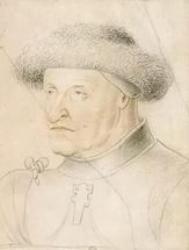
John Pim
 Great Britain
Biography of John Pym
John Ruth Pym (1584-1643) was an outstanding English political figure. He studied at Oxford and held a position in the Treasury, where he likely gained his distinguished financial experience. In 1621, Pym entered Parliament and soon emerged as one of the leaders of the opposition. In 1626, Pym was among the accusers of Buckingham, and in 1628, he stood for the Petition of Right.
Influence and Activism
Pym's influence began with the calling of the Short Parliament in 1640. He delivered a lengthy speech on the abuses of royal government during the period without Parliament and proposed that the conclusion of peace with Scotland should be a condition for granting subsidies to the king. After the dissolution of the Short Parliament, Pym and S. John composed a petition to 12 peers, insisting on the abolition of abuses in the convening of the new Parliament. Pym traveled almost all over England, developing his principles and recruiting supporters.
In the Long Parliament (November 1640), Pym became one of the leading prosecutors of Strafford and advocated for the implementation of three-year parliamentary terms. During Strafford's trial, Pym initially insisted, contrary to the majority of his party, on charging him with high treason. However, as it became impossible to bring the accused's actions under the law, he had to consent to his conviction by the House through a bill of attainder. Expressing the desire of the parliamentary majority to limit royal power, Pym demanded ministerial accountability to Parliament. He failed to achieve an agreement between the two parties that had formed on the church issue.
Key Contributions
During the drafting of the Grand Remonstrance (November 1641), Pym's proposal to subject the church to parliamentary control prevailed. The Remonstrance led to an unsuccessful attempt by the king to arrest Pym and other members of Parliament on charges of treason. Threatened deputies sought refuge in the City, and the Parliament followed. With the king removed from London, Pym became the chief leader of parliamentary policy.
His significant achievements included forging an alliance with Scottish Presbyterians and implementing astute financial measures that made it possible to continue the war. Known as the "King Pym" among his supporters, he did not live to see the triumph of Parliament. He can be considered one of the founders of party rule in England. Under the influence of his skilled tactics, Parliament began to operate methodically and develop solid strategies. Pym was far from political and religious radicalism and always sought support in tradition and the law. Only the inability to reach an agreement with the king forced him to adopt the principle of parliamentary supremacy.