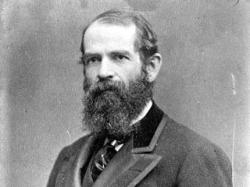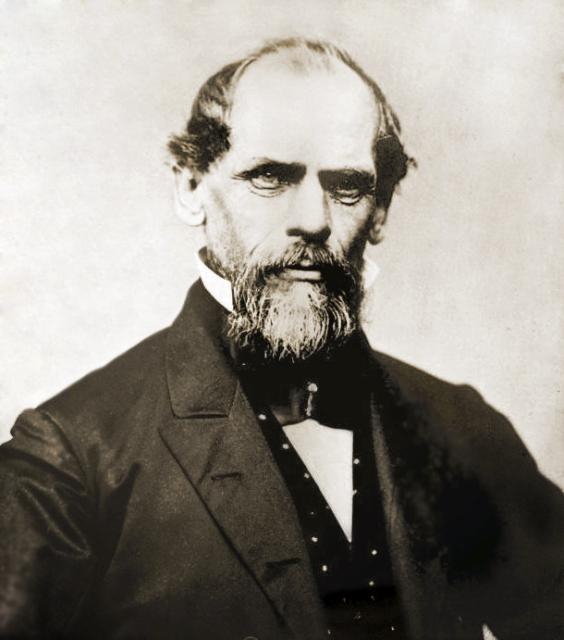
John Roebling
 USA
USABiography of John Roebling
John Augustus Roebling, born Johann August Röbling, was an American engineer and builder, and a pioneer in the construction of steel suspension bridges. His most famous work is the Brooklyn Bridge in New York City.
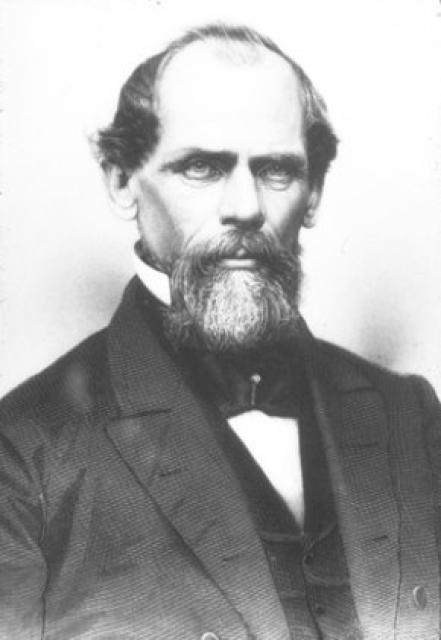
Early Life and Career
John Augustus Roebling was born on June 12, 1806, in the town of Mühlhausen, Thuringia, Germany. After completing his education at the Polytechnic School in Berlin, Roebling worked for the Prussian government for three years before immigrating to the United States at the age of twenty-five. He settled in a small colony, later named Saxonburg, near Pittsburgh, Pennsylvania, along with other people from his hometown. He married the daughter of another immigrant from Mühlhausen and became the father of nine children.
After several unsuccessful attempts at farming, Roebling relocated to the state capital of Pennsylvania, Harrisburg, and worked as a civil engineer. While observing the movement of boats on a canal, he came up with the brilliant idea of replacing wooden towing cables with wire ropes. With the approval of the canal authorities, he developed his own method of wire rope manufacturing, which proved to be incredibly strong and durable, as Roebling had predicted. The demand for his cables grew so much that he decided to open a factory in Trenton, New Jersey. This marked the beginning of a large industrial complex that produced everything from wire to the strongest 36-inch cables. The factory remained in the hands of the Roebling family for three generations and continues to be their main business.
Engineering Career and Legacy
Despite his success as an entrepreneur, John Roebling was primarily an engineer. As his reputation grew as a designer and builder of long-span suspension bridges, he devoted less time to the Trenton factory. His eldest son, Washington, joined his father's work, and together they constructed four suspension bridges in the 1850s and 1860s: two in Pittsburgh, one at Niagara Falls, and another crossing the Ohio River between Cincinnati and Covington, with a span of 1,051 feet (320 meters).
The state of New York approved Roebling's design for a suspension bridge across the East River between Brooklyn and Manhattan (which were separate cities at the time) with a span of 1,595 feet (486 meters). Roebling was appointed as the chief engineer for the project. However, his work on this bridge cost him his life. While conducting final measurements, his boat was struck by a ferry that was driving piles. One of the piling structures crushed Roebling's foot, and he was urgently taken to his son's home. Doctors amputated his injured foot, but three weeks later, on July 22, 1869, Roebling died of tetanus at the age of sixty-three. His son continued the work on his father's main project.
The Brooklyn Bridge was completed in 1883. At the time of its completion, it was the largest suspension bridge in the world (a record that stood until 1903) and the first bridge to use steel cables in its construction. It remains one of the most iconic and famous symbols of New York City to this day.