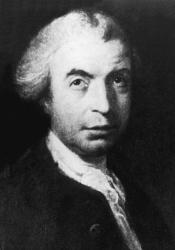
John Strett
 Great Britain
- John William Strutt, Third Baron Rayleigh
- Scientific Research at Terling Place
- Lord Rayleigh and Cavendish Laboratory
- Return to Terling Place and Continued Research
- Discovery of Argon and Nobel Prize
- Legacy and Honors
John William Strutt, Third Baron Rayleigh
Early Life and EducationJohn William Strutt was born in Langford Grove, Maldon, Essex, England on November 12, 1842. His father, John James Strutt, was the Second Baron Rayleigh, and his mother was Clara Elizabeth Vickers.
Strutt suffered from a variety of debilitating illnesses as a child, causing frequent interruptions to his education. He briefly attended Eton College at age ten, spent three years at a private school in Wimbledon, had a short stint at Harrow School, and spent four years studying privately.
In 1861, Strutt entered Trinity College, Cambridge, where he studied mathematics and physics under E. J. Routh, a renowned mathematician. He graduated with honors in 1865 and was elected a Fellow of Trinity College the following year, a position he held until 1871.
Scientific Research at Terling Place
In 1868, Strutt established a scientific laboratory at Terling Place, Witham, Essex, where he pursued his interests in radiation phenomena. His research in this area led to the publication of papers on acoustics and optics, establishing his reputation as an authority in these fields.
In 1871, he derived the formula for the scattering of light by very small particles, known as Rayleigh scattering. This formula explains why the sky appears blue and sunsets appear red.
Lord Rayleigh and Cavendish Laboratory
In 1873, upon the death of his father, Strutt became the third Baron Rayleigh and inherited the family estate of 7,000 acres. However, he asked his younger brother to assume those responsibilities and devoted himself almost entirely to science, working from his home laboratory.
In 1879, Strutt reluctantly accepted an offer to become the Professor of Experimental Physics and Director of the Cavendish Laboratory at Cambridge, following the death of James Clerk Maxwell. At Cambridge, he initiated a program of precise re-determinations of the electrical units of volt, ohm, and ampere.
Return to Terling Place and Continued Research
After five years at Cambridge, Strutt resigned and returned to Terling Place, where he continued his research for the rest of his life. He pursued several projects simultaneously, conducting experiments in the laboratory and performing theoretical work in his study.
He published seminal works on a wide range of subjects, including light and sound waves, electromagnetism, mechanical theorems, vibrations of elastic media, capillarity, and thermodynamics. His classic two-volume treatise, "The Theory of Sound," published in 1877-1878, remains an enduring reference for scientists and engineers.
Discovery of Argon and Nobel Prize
In 1892, Strutt began a series of measurements on the densities of gases relative to their atomic weights, prompted by his interest in Prout's hypothesis. His meticulous experiments led him to question the validity of the hypothesis.
While investigating nitrogen, Strutt noticed a discrepancy between the density of nitrogen obtained from ammonia and that obtained from air. By repeating the arduous experiments of Henry Cavendish, he discovered that nitrogen from air contained a small amount of another gas or gases.
Collaborating with William Ramsay, a Scottish chemist, Strutt isolated the elusive gas and announced its discovery in 1895. They named it argon, meaning "lazy" in Greek, due to its chemical inertness.
Legacy and Honors
Strutt was a prolific author, publishing over 400 papers in his more than fifty years of research. Although his discovery of argon is most well-known, his work encompassed virtually every aspect of classical physics.
He was a Fellow of the Royal Society, served as its Secretary from 1885 to 1896 and President from 1905 to 1908. He was also involved in a number of scientific and government organizations, including the Advisory Committee for Aeronautics and the Committee on Explosives at the War Office.
Strutt received numerous awards, including the Nobel Prize in Physics in 1904 "for his investigations of the densities of the most important gases and for his discovery of argon in the course of this research."
He continued to work until shortly before his death at Terling Place on June 30, 1919. He is often considered the last of the great British classical physicists.