John Waters
- Growing Up in Baltimore
- The “Pope of Trash”
- From Underground Success to Hairspray
- Writing, Performance, and Visual Art
- Later Career and Legacy
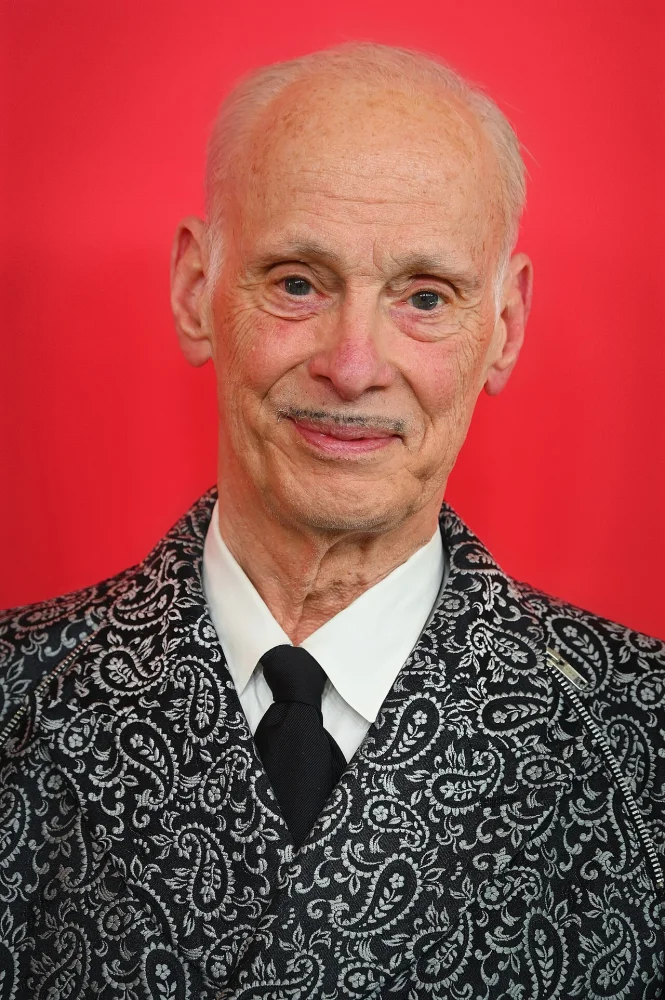
John Waters built a film career out of testing the limits of taste—and then surprised audiences by taking that same unruly comic sensibility into mainstream comedy. From homemade black-and-white shorts to the international success of Hairspray, his work has turned Baltimore into a stage for outrageous characters, sharp social satire, and affection for people living outside conventional respectability.
Growing Up in Baltimore
Waters was born in Baltimore, Maryland, on April 22, 1946. He grew up in a comfortable suburban family and became fascinated early with movies, especially lurid exploitation films whose posters promised scandal and danger. As a teenager, he began making short films with an 8mm camera. His first shorts, including Hag in a Black Leather Jacket (1964), already showed his taste for provocation and the theatrical.
He briefly studied at New York University but returned to Baltimore and committed himself to filmmaking on his own terms. There he gathered a circle of friends, actors, and collaborators who became known as the Dreamlanders. The group included Divine, the stage name of his childhood friend Glenn Milstead, along with Mink Stole, David Lochary, Mary Vivian Pearce, and Edith Massey. They made films with small budgets, local locations, and an irreverent closeness that became a signature of Waters’s early work.
The “Pope of Trash”
His first features, Mondo Trasho (1969) and Multiple Maniacs (1970), established a taste for grotesque comedy and deliberate bad taste. Pink Flamingos (1972) made him a cult sensation. The film follows Divine’s Babs Johnson as she competes for the title of “Filthiest Person Alive,” escalating into deliberately shocking acts. It became notorious for its transgressive content and midnight screenings, and helped earn Waters the nickname “Pope of Trash,” a label he embraced.
Waters followed with Female Trouble (1974) and Desperate Living (1977), completing what he called his “Trash Trilogy.” The films turned social outcasts into flamboyant antiheroes and made a joke of middle-class respectability. Their provocation also brought censorship battles and critical hostility, but they found devoted audiences who recognized the combination of shock, satire, and affection beneath the outrageous surfaces.
From Underground Success to Hairspray
Polyester (1981), starring Divine and former heartthrob Tab Hunter, marked a more polished phase while retaining Waters’s taste for camp. It was released with “Odorama” scratch-and-sniff cards that invited audiences to smell along with the film’s scenes. Hairspray (1988) became his commercial breakthrough. Set in 1960s Baltimore, it follows teenager Tracy Turnblad as she challenges segregation on a local dance show. The film combines comic excess with a clear argument for racial integration, and Divine appeared in a dual role as Tracy’s mother, Edna, and the villainous Arvin Hodgepile.
Hairspray reached a broad audience and later inspired a successful Broadway musical and a 2007 film adaptation. Waters continued to write and direct features including Cry-Baby (1990), Serial Mom (1994), Pecker (1998), Cecil B. Demented (2000), and A Dirty Shame (2004). His later work remained mischievous and provocative, even as it explored more polished genres and larger productions.
Writing, Performance, and Visual Art
Waters has also worked as an actor, visual artist, and author. His books include the memoir Shock Value, the advice and portrait collection Role Models, the travel memoir Carsick, and the novel Liarmouth. In 2025, he published a collection of his screenplays, bringing several of his best-known scripts into print. His spoken-word performances, including The Naked Truth and A John Waters Christmas, have kept his sharp, personal storytelling in front of live audiences.
He has also exhibited visual art, often using photographs and found imagery to play with celebrity, consumer culture, and the line between glamour and tackiness. Waters is openly gay, and his films have long challenged narrow ideas about sexuality, gender presentation, and what kinds of people are allowed to be comic or heroic.
Later Career and Legacy
Waters has not directed a feature film since A Dirty Shame, but he remains active in performance and acting. In 2026 he joined the cast of American Horror Story: 13 and continued touring with his spoken-word shows. He has described his work as being rooted in Baltimore, where he still maintains a strong connection, even as he spends time in other cities.
His influence can be seen in independent cinema, queer film, and comedy that treats bad taste as a tool for exposing social rules. Waters’s films have made space for outsiders while refusing to sanitize them. Beneath the outrageous jokes is a consistent belief that people should be free to define themselves—and that the most respectable institutions are often the funniest targets.