Jorge Dias
 Portugal
- George Dias: The Founder of Modern Portuguese Ethnology
- Early Life and Education
- Contributions to Ethnology
- International Recognition
George Dias: The Founder of Modern Portuguese Ethnology
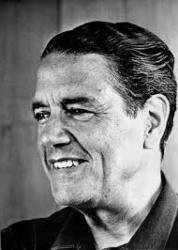
George Dias, a renowned Portuguese ethnologist and anthropologist, is widely recognized as the founder of modern Portuguese ethnology and the creator of a scientific school. Throughout his career, he organized and conducted extensive field ethnographic work, developing an original system of theoretical perspectives. As a professor at the Universities of Coimbra, Lisbon, and others, Dias played a crucial role in establishing the teaching of ethnology. He also served as the head of the International Organization for European Ethnology under UNESCO (CIAP) and founded the Overseas Ethnology Museum in Lisbon.
Early Life and Education
George Dias was born in the city of Porto. In 1938, he graduated from the Faculty of Philology at the University of Coimbra and received a scholarship to lecture on Portuguese language and culture at foreign universities, including Germany and Spain. In 1939, Dias began teaching Portuguese language in Munich, Rostock in 1942, Santiago de Compostela in 1944, and Madrid in 1946. During his time in Berlin, Dias attended lectures by Richard Thurnwald, which sparked his interest in ethnology. In Munich, under the guidance of Professor Höfler, Dias defended his doctoral dissertation in folk studies, focusing on the rural community of Vilarinhos de Furna.
Contributions to Ethnology
In Santiago de Compostela, Dias organized and led the Department of Portuguese Culture. In 1947, he returned to Portugal and was invited to conduct ethnographic research at the Center for Ethnological Studies of the Peninsula (CEEP). From 1948 onwards, Dias conducted extensive ethnological research on continental Portugal within the framework of the Center for Ethnological Studies of the Peninsula (SEER) and later at the Center for Cultural and Anthropological Studies (CEAC). Alongside a small circle of his students and assistants, such as E.V. Oliveira and B.E. Pereira, Dias collected, systematized, and published an enormous amount of ethnographic material.
Under the auspices of CEAC, Dias embarked on a research expedition to Africa. He conducted comprehensive field research among the Makonde people in Mozambique. The result of this trip was his celebrated monograph, "The Makonde of Mozambique," which is considered a model of ethnographic research in Portugal.
International Recognition
Dias gained international acclaim for his work. In the 1940s, his study on the classification and origins of farming tools received enthusiastic praise from researchers such as S. Erickson, P. Rivière, and A. Van Gennep. Dias played an active role in organizing the Commission Internationale des Arts et Traditions Populaires (CIAP), which brought together ethnographers and folklorists from all European countries. He helped resolve the long-standing dispute between folklorists and ethnologists. In 1954, Dias was elected as the Secretary-General of this organization. During his tenure from 1954 to 1956, the CIAP headquarters were located in Portugal.
Dias was known for his principled stance and active advocacy for unity in the study of peoples, opposing the division of research subjects based on one's own people and others, typically non-European peoples. He fought for this cause at the 1952 Congress in Vienna and the 1955 Congress in the Netherlands, which he proposed renaming from "Congress of Folklore" to "Congress of Regional Ethnology."
Additionally, thanks to George Dias, two ethnographic museums and departments of ethnological disciplines were established in Portugal. In 1964, he attended the International Congress of Anthropology and Ethnology in Moscow.
George Dias dedicated his life to advancing the field of ethnology, leaving a lasting legacy in Portuguese and international academia.