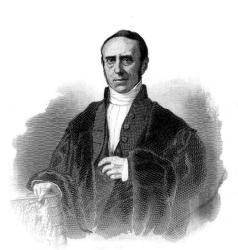
Jose de Acosta
 Spain
Spain- José de Acosta: Life and Contributions
- Missionary Work in South America
- Conflict and Return to Spain
- Scientific and Literary Work
- Contributions to Geophysics
- Influence on Humboldt
- Other Contributions
- Legacy
José de Acosta: Life and Contributions
Early Life and EducationJosé de Acosta was born in Medina del Campo, Spain, on September 19, 1539. At the age of 13, he joined the Society of Jesus (Jesuits). He studied theology at Ocana and was ordained as a priest in 1566.
Missionary Work in South America
In 1559, Acosta traveled to Lima, Peru, to begin his missionary work. He taught theology at Jesuit colleges throughout the viceroyalty and founded several educational institutions. From 1576 to 1585, he served as the provincial of the Jesuit order in Peru. During his time in South America, Acosta gathered extensive knowledge about the region's natural history and indigenous cultures.
Conflict and Return to Spain
Acosta's conflict with Viceroy Francisco de Toledo led to his recall to Spain in 1585. Before returning, he spent time in Mexico, where he continued his research. In 1587, he returned to Europe and became a close advisor to King Philip II.
Scientific and Literary Work
After returning to Spain, Acosta lived in Rome, Valladolid, and Salamanca. He held several positions, including university professor, church preacher, and Jesuit official. His most well-known work, Historia natural y moral de las Indias (Natural and Moral History of the Indies), was published in 1590. This book contained detailed descriptions of the American continent, its climate, geography, and indigenous cultures.
Contributions to Geophysics
Acosta's Historia was groundbreaking in its contributions to geophysics. He theorized about four lines of zero magnetic declination, described the use of the compass and angle of deviation, and identified places with zero declination. He also discussed the bending of isothermal lines, the distribution of heat according to latitude, and the direction of ocean currents.
Influence on Humboldt
Alexander von Humboldt praised Acosta's work, calling him one of the founders of geophysics. Acosta's theories influenced Humboldt's own research on South America.
Other Contributions
In addition to his scientific work, Acosta was also interested in languages and alphabets. He studied Chinese and Japanese characters and described the differences between them.
Legacy
José de Acosta died in Valladolid, Spain, on February 15, 1600. His contributions to history, geography, and natural history had a profound impact on scholars and explorers for centuries to come.