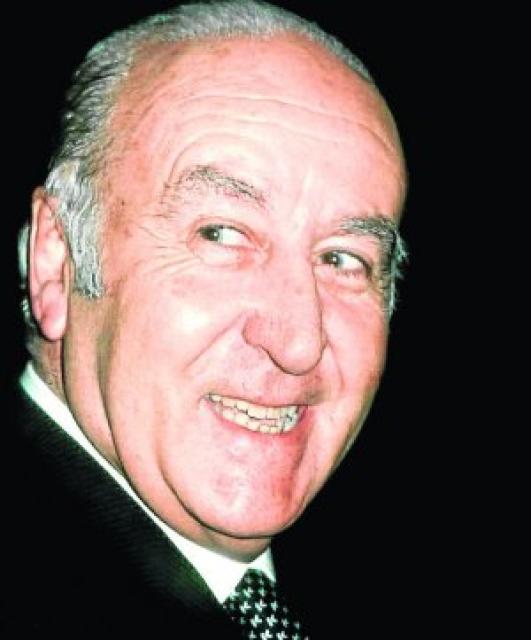
Jose Maria de Areilza
 Spain
Spain- Biography of José María de Areilza
- Education and Early Career
- Political Career
- Opposition to the Franco Regime
- Transition to Democracy
Biography of José María de Areilza
José María de Areilza, a Spanish politician and diplomat, was born on August 23, 1909, in Bilbao, Spain. He came from a prominent family, being the son of renowned surgeon Dr. Enrique de Areilza and Countess Rodas.
Education and Early Career
Areilza completed his education at the University of Salamanca, where he graduated from the Law Faculty. He also studied at the University of Bilbao, where he obtained a degree in engineering.
Political Career
From a young age, Areilza was a member of the Monarchist Union of Biscay. During the Spanish Civil War (1936-1939), he fought on the side of the Nationalists and played a role in the creation of the Spanish Traditionalist Phalanx and the National-Syndicalist Offensive Committees, the only legal party in Francoist Spain.
In 1937-1938, Areilza served as the Mayor of Bilbao, leading the city after its occupation by Nationalist forces. From 1938 to 1940, he held the position of General Director of the Ministry of Industry in the government of Francisco Franco.
Areilza's career continued to flourish, and he became a member of the State Council and Procurator of the Cortes (Deputy of Parliament) from 1940 to 1946. He also served on the Council of National Economy during this time.
In 1947, Areilza was appointed as the Ambassador of Spain to Argentina, a position he held until 1950. He then engaged in industrial and banking activities from 1950 to 1954 before being appointed as the Ambassador of Spain to the United States from 1954 to 1960. He subsequently served as the Ambassador to France from 1960 to 1964.
Opposition to the Franco Regime
During his diplomatic career, Areilza gradually became critical of the Franco regime. In 1963, he vigorously but unsuccessfully advocated for the commutation of a death sentence imposed on communist leader Juliano Grimau. He also advocated for the establishment of diplomatic relations with the Soviet Union and proposed political reforms to Franco, who coldly rejected his suggestions.
In 1964, Areilza resigned from his diplomatic post and openly joined the opposition against the Franco regime. From 1966 to 1969, he headed the political secretariat of Don Juan, Count of Barcelona, the father of future King Juan Carlos I.
Transition to Democracy
After Franco's death in 1975, Areilza was appointed as the Minister of Foreign Affairs in the first post-Franco government of Spain (December 1975 - July 1976). He played a crucial role in developing democratic changes in the country's foreign policy and advocated for the swift implementation of political reforms.
Although not appointed as the Prime Minister, Areilza remained an active supporter of the establishment of a constitutional monarchy, the democratization of the political regime, and European integration. He was considered one of the key figures in the dismantling of the Francoist regime.
In 1976, Areilza co-founded the People's Party, a right-centrist party and one of the precursors to the current largest conservative party in Spain. He later served as a member of the Spanish Parliament and became the Chairman of the Parliamentary Assembly of the Council of Europe in 1981.
Areilza's contributions were not limited to politics. He was a prolific author, writing numerous books and articles, including "Diary of a Minister of the Monarchy" (1977) and "The Europe We Want" (1986). The latter received the Espasa de Ensayo Prize and focused on Spain's entry into the European Union.
In 1991, Areilza founded the Institute of International Issues and Foreign Policy. He died on February 22, 1998, leaving behind a legacy as a distinguished Spanish diplomat and advocate for democracy and European integration.



