
Charles Bradlaugh
 Great Britain
- Charles Bradlaugh: A Pioneering Atheist and Political Activist
- Encounter with Religion and Atheism
- Emergence as an Atheist Activist
- Leadership in Secularist Organizations
- Legal Challenges and Trials
- Political Engagement
- Legacy and Impact
Charles Bradlaugh: A Pioneering Atheist and Political Activist
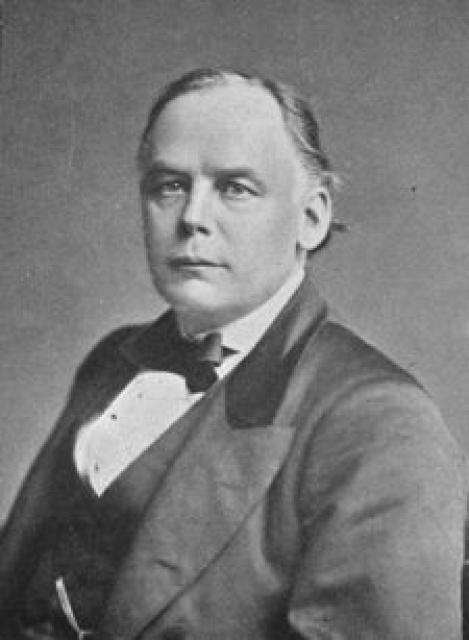
Early Life and InfluencesCharles Bradlaugh was born on September 26, 1833, in Hoxton, East London. His father worked as a solicitor's assistant. At the age of eleven, Bradlaugh left school and worked as an office boy in a law firm. He later became a clerk and cashier for a coal merchant.
Encounter with Religion and Atheism
While training to become a Sunday school teacher, Bradlaugh began to question the inconsistencies between the Thirty-Nine Articles of the Anglican Church and the Bible. He shared his concerns with the local vicar, John Graham Packer, who accused him of atheism and expelled him from the church and Sunday school. Facing rejection from his family, Bradlaugh joined the 7th Dragoon Guards in hopes of serving in India. However, he ended up serving in Dublin, Ireland, for three years before resigning in 1853.
Emergence as an Atheist Activist
Prior to his military service, Bradlaugh had met George Holyoake, who organized his first public lecture as an atheist. At the age of 17, Bradlaugh published his first pamphlet, "A Few Words on Christian Belief." Returning to London as a staunch freethinker after his military discharge, Bradlaugh engaged in debates and wrote about secularist ideas under the pseudonym "Iconoclast." He gradually gained prominence within liberal and radical political groups.
Leadership in Secularist Organizations
In 1858, Bradlaugh became the president of the London Secular Society. In 1860, he became the editor of the secularist newspaper "National Reformer," and in 1866, he co-founded the National Secular Society. He collaborated closely with the radical activist Annie Besant, with whom he had a close personal relationship.
Legal Challenges and Trials
In 1868, Bradlaugh was tried for blasphemy and sedition. He was acquitted on all charges, but the case stirred significant controversy in the courts and the press. A decade later, he and Besant republished Charles Knowlton's pamphlet "Fruits of Philosophy," leading to another trial in 1877. They were convicted and sentenced to heavy fines and six months in prison.
Political Engagement
Bradlaugh was an advocate for trade unions, republicanism, and women's suffrage. In 1880, he was elected to Parliament for Northampton, but his atheism prevented him from taking his seat due to the required oath of allegiance to the Church of England. Despite repeated attempts to claim his seat, he was arrested and imprisoned. In a subsequent election, he was re-elected and, with the support of William Gladstone, George Bernard Shaw, and hundreds of thousands of public petitioners, finally took his place in Parliament.
Legacy and Impact
Charles Bradlaugh died on January 30, 1891. His funeral was attended by 3,000 mourners, including the Indian spiritual leader Mohandas Gandhi. Bradlaugh was buried in Brookwood Cemetery. He remains a revered figure in atheist and secularist circles and is remembered for his unwavering advocacy for freethought and social justice.


