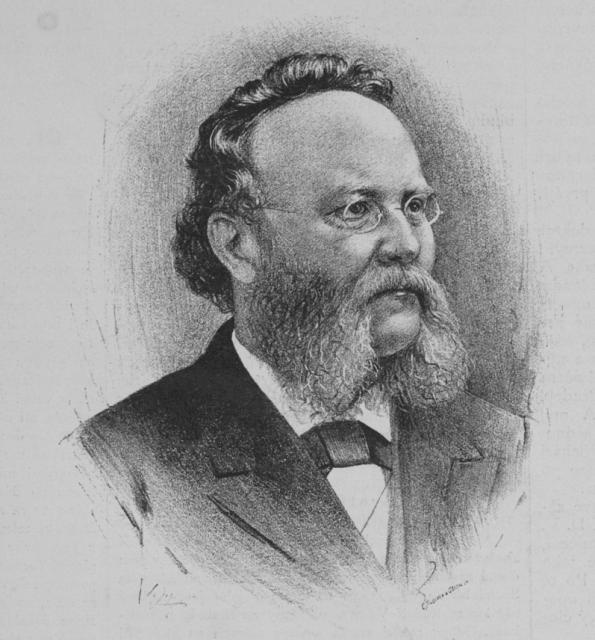
Josef Jirecek
 Czech
Czech- Josef Jireček
- Career in Education and Politics
- Literary Contributions
- Support for the Kralovédvorský Manuscript
- Legacy
Josef Jireček
Early Life and EducationJosef Jireček was born in Hořiněves, Bohemia, in 1825. He was the brother of Hermenegild Jireček and the father of Konstantin Josef Jireček. Jireček received his education in Prague, where he studied law and history.
Career in Education and Politics
After completing his studies, Jireček worked in the Ministry of Education. He played a significant role in advocating for equal access to education for Slavic national minorities in the Austrian Empire. His efforts were instrumental in promoting the rights and recognition of Czech culture.
In 1879, Jireček was elected to the Austrian Parliament, where he continued to champion the interests of the Slavic peoples. He also served as the President of the Czech Academy of Sciences from 1875 until his death in 1888.
Literary Contributions
Jireček made significant contributions to Czech literature. He compiled a three-volume anthology of Czech literature (1858-1861) and a biographical dictionary of Czech writers (1875-1876). He also prepared scholarly editions of works by renowned Czech authors.
Support for the Kralovédvorský Manuscript
Along with his brother Hermenegild, Josef Jireček strongly defended the authenticity of the Kralovédvorský Manuscript in 1862. This enigmatic collection of medieval Czech literary fragments has been the subject of intense debate and controversy. Jireček's support for its authenticity helped raise the profile of Czech literature and national identity.
Legacy
Josef Jireček was a prominent figure in Czech cultural and political life. His contributions to education, literature, and politics had a lasting impact on Czech society. He remains recognized as a champion of Slavic languages and an advocate for the preservation and promotion of Czech cultural heritage.


