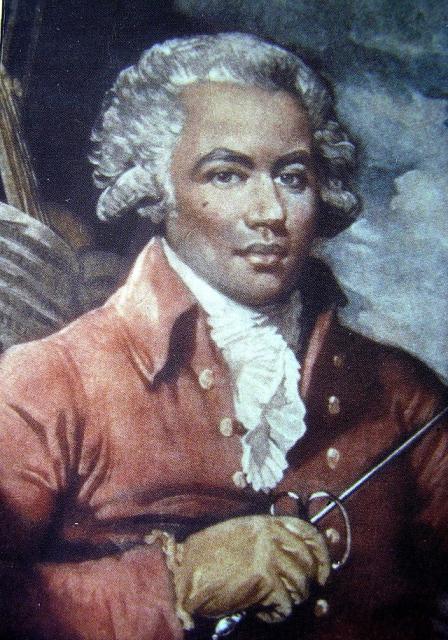
Joseph Bologne de Saint-George
 France
- The Multifaceted Chevalier de Saint-George
- Birth and Early Years
- Education and Fencing Prodigy
- Military and Title
- Musical Accomplishments
- Controversy at the Royal Opera
- Later Years and Revolutionary Era
- Imprisonment and Death
The Multifaceted Chevalier de Saint-George
In the tumultuous era of the late 17th century, amidst a constellation of brilliant minds, emerged the enigmatic figure of Chevalier de Saint-George, a man of extraordinary talent and complex heritage. Born to an aristocratic father and an enslaved African woman, Saint-George's life was marked by both privilege and prejudice.
Birth and Early Years
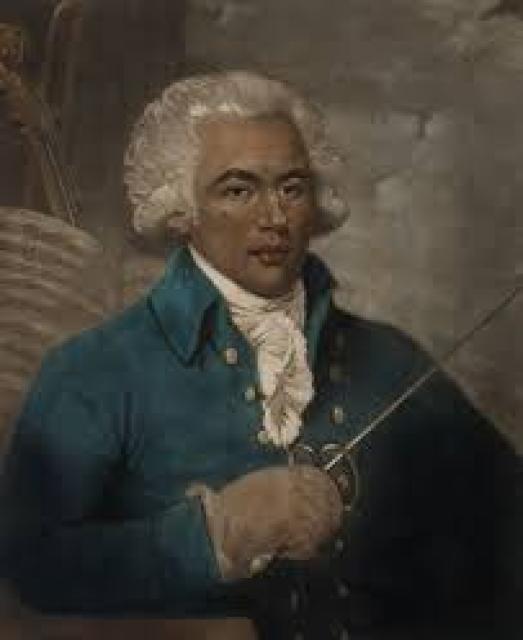
Joseph Boulogne was born on December 25, 1739 (or possibly 1745) on the island of Basse-Terre. His father, Georges de Bologne Saint-George, was a wealthy French plantation owner, while his mother, Nanon, was an enslaved woman. Under the "Black Code" of French colonies, such children could be claimed as slaves, but young Joseph was raised alongside his half-sister, born from his father's legitimate marriage.
Education and Fencing Prodigy
Following a duel and the subsequent death of his father, young Joseph traveled to Paris for education. He excelled in fencing, studying under Nicolas de Boëssier, a renowned teacher. By age 15, Saint-George was a virtuoso violinist and a skilled swordsman, displaying an exceptional physique and striking appearance.
Military and Title
At the age of 16, Saint-George joined the royal guard, later using his father's connections to acquire the title of chevalier and the royal councilorship. Despite his status as a freed slave with the privileges of a free subject, he often faced racism.
Musical Accomplishments
Saint-George's true passion lay in music. He studied under renowned musicians, including Jean-Marie Leclair and Pierre Gaviniès. His violin playing and conducting skills were so exceptional that he performed for Marie-Antoinette and led the Concert des Amateurs, one of Europe's finest orchestras. He composed numerous operas, symphonies, and other works, many of which are still performed today.
Controversy at the Royal Opera
In 1777, Saint-George was offered the position of director of the Royal Opera. However, a scandal erupted when the leading ladies of the theater objected to being under the authority of a black man. The appointment was withdrawn, leaving Saint-George in financial straits.
Later Years and Revolutionary Era
Saint-George continued his musical pursuits, composing and conducting, while facing financial difficulties. He joined the Masonic lodge's orchestra, founded by the Duke of Orleans, and engaged in paid fencing matches to supplement his income.
During the French Revolution, Saint-George became a captain in the National Guard, later commanding the all-black Legion of Saint-George. He played a role in defending Lille from Austrian forces and suppressing the Haitian rebellion.
Imprisonment and Death
In 1794, Saint-George was imprisoned following a false accusation. He was released several months later, but his military career was cut short. He returned to music, but his career was interrupted by his untimely death in 1799.




