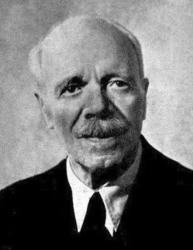
Joseph Deniker
 France
- Joseph Deniker: A Pioneer in Natural History and Anthropology
- Early Life and Education
- Parisian Life and Scientific Pursuits
- Anthropological Contributions
- Publications and Lectures
- Legacy
Joseph Deniker: A Pioneer in Natural History and Anthropology
Joseph (Josef) Deniker, a French naturalist and anthropologist, made significant contributions to the study of human diversity and natural history.
Early Life and Education
Born in Astrakhan, Russian Empire, in 1852 to French parents, Deniker graduated from the Saint Petersburg Technological Institute as an engineer. He embarked on expeditions to the Caucasus and Northern Persia to investigate oil deposits before traveling extensively throughout Central Europe, Italy, Dalmatia, and Montenegro.
Parisian Life and Scientific Pursuits
In 1876, Deniker settled in Paris, where he pursued a course in natural sciences at the Sorbonne. In 1888, he became the chief librarian of the Paris Natural History Museum and served as one of the chief editors of Vivien de St. Martin's "Dictionnaire de géographie universelle" and a contributor to the "Grande Encyclopédie."
Anthropological Contributions
Deniker is best known for his classification of human races (1900), which systematically used physical characteristics to distinguish anthropological types. While lacking a historical perspective, his principles remain influential today. He also created the first maps of racial distribution in Europe.
Publications and Lectures
Deniker authored numerous articles in scientific journals, including "Comptes rendus de l'Académie," "Bulletins de la Société d'anthropologie de Paris," "Société zoologique de France," and "Revue d'anthropologie." In 1904, he became a lecturer at the Royal Anthropological Institute of Great Britain.
Legacy
In 1898, Deniker introduced Agvan Dorzhiev to Émile Guimet in Paris. Deniker passed away in Paris in 1918, leaving behind a legacy as a pioneering figure in natural history and anthropology.