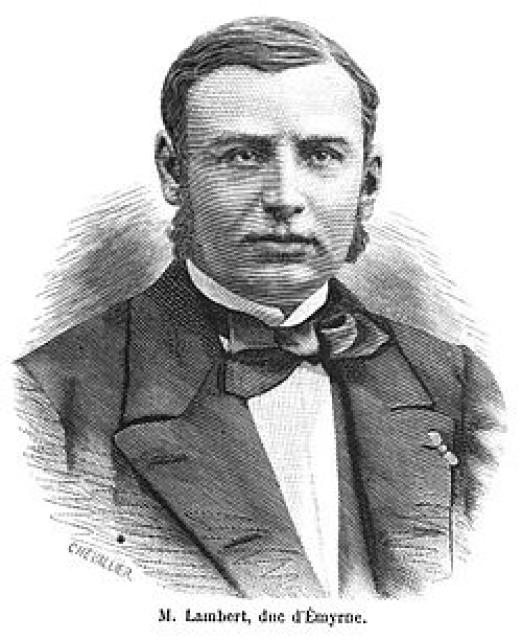
Joseph-Francois Lambert
 France
- Early Life and Arrival in Mauritius
- Involvement in Madagascar's Development
- The "Lambert Treaty" and French Ambitions
- Conspiracy and Exile
- Return and Industrialization
- Assassination of Radama II
- Later Life and Legacy
Joseph-François Lambert: A French Adventurer and Architect of Madagascar's Industrialization
Early Life and Arrival in Mauritius
Joseph-François Lambert, a French adventurer, arrived on the island of Mauritius in 1846, where he married a wealthy widow and used her fortune to engage in the slave trade.
Involvement in Madagascar's Development
In 1854, Lambert traveled to Madagascar and sponsored the Malagasy army's conquest of coastal tribes. Impressed with his support, Queen Ranavalona I invited him to her court in Antananarivo, where he met French industrialist Jean Laborde. Together, they established connections with Prince Rakotondradama (later King Radama II), who granted Lambert exclusive rights to mining, forestry, and unoccupied lands in Madagascar in exchange for a 10% tax.
The "Lambert Treaty" and French Ambitions
In 1855, Lambert signed the "Lambert Treaty" with Radama II on behalf of France. However, its legitimacy was questioned, as Prince Rakotondradama lacked the authority to sign it. This agreement became a pretext for France to intervene in Madagascar, ultimately leading to two Franco-Malagasy wars and Madagascar's colonization.
Conspiracy and Exile
Lambert unsuccessfully sought support in London and Paris to overthrow Queen Ranavalona I. Returning to Madagascar in 1857, he plotted against her, but the plot was discovered and he was expelled from the island along with other Europeans.
Return and Industrialization
Upon the death of Queen Ranavalona I, Radama II confirmed the "Lambert Treaty" and granted him the title "Duke of Imerina." Lambert established an industrial and financial company focused on mining, which was supported by Radama II in 1863.
Assassination of Radama II
Lambert's influence aroused the ire of Malagasy noblemen, who conspired to assassinate Radama II in 1863. The new Malagasy government attempted to revoke the "Lambert Treaty," prompting a negative reaction from France and, ultimately, French military intervention.
Later Life and Legacy
After Radama II's assassination, Lambert fled to the Comoros Islands in 1865 and served as Regent of the island of Mwali (Mohéli) from 1868 to 1871. He passed away in the Comoros in 1873. His involvement in Madagascar's industrialization and the controversial "Lambert Treaty" left a lasting impact on the island's history and its relationship with France.


