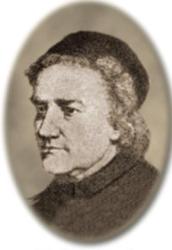
Joseph John Thomson
 Great Britain
Biography of Joseph John Thomson
Joseph John Thomson, also known as Lord Kelvin, was an English physicist and one of the founders of thermodynamics. He was born in Cheetham Hill, a suburb of Manchester, to Joseph James Thomson and Emma (née Swindells) Thomson. At the age of fourteen, Thomson was sent to Owens College (now the University of Manchester) by his father, who wanted him to become an engineer. However, his father passed away two years later, leaving him without means. Nevertheless, with the financial support of his mother and a scholarship from Owens College, Thomson continued his education and played a significant role in his career as the college had a well-equipped physics department and offered courses in experimental physics, unlike most colleges at that time. In 1876, Thomson obtained the degree of engineer from Owens College and then entered Trinity College, Cambridge University. Here, he studied mathematics and its applications to problems in theoretical physics. He received his bachelor's degree in mathematics in 1880 and was elected a fellow of Trinity College the following year, where he began working at the Cavendish Laboratory in Cambridge. In 1884, J.W. Strutt, the successor to James Clerk Maxwell as professor of experimental physics and director of the Cavendish Laboratory, retired. Thomson took over the position, even though he was only twenty-seven years old and had not yet achieved any significant success in experimental physics. However, he was highly regarded as a mathematical physicist and actively applied Maxwell's theory of electromagnetism, which was considered sufficient to recommend him for the position. Starting his new duties in the laboratory, Thomson decided that his main research focus would be the study of electrical conductivity in gases. He was particularly interested in the effects that occur when an electric discharge passes between electrodes placed at opposite ends of a glass tube from which almost all air has been evacuated. Several researchers, including the English physicist William Crookes, had noticed an interesting phenomenon occurring in these gas-discharge tubes. When the gas becomes sufficiently rarefied, the glass walls of the tube located at the end opposite the cathode (negative electrode) begin to fluoresce with a greenish light, which, apparently, occurs under the influence of the radiation generated at the cathode. Cathode rays aroused great interest in the scientific community, and various opinions were expressed regarding their nature. Most British physicists believed that these rays represented a stream of charged particles. On the contrary, most German scientists were inclined to the view that they were disturbances, perhaps oscillations or currents, in a hypothetical weightless medium in which, they believed, such radiation propagated. From this point of view, cathode rays were considered to be something like a high-frequency electromagnetic wave, similar to ultraviolet light. The Germans referred to the experiments of Heinrich Hertz, who, it was believed, had discovered that cathode rays, when deflected by a magnetic field, remained unaffected by a strong electric field. It was postulated that this refuted the idea that cathode rays were a stream of charged particles because an electric field invariably affects the trajectory of such particles. Even if this were the case, however, the experimental arguments of the German scientists were not entirely convincing. Research on cathode rays and related phenomena revived with Wilhelm Röntgen's discovery of X-rays in 1895. By the way, this form of radiation, which had not been suspected before, also occurs in gas-discharge tubes (but not at the cathode, but at the anode). Shortly after, Thomson, working together with Ernest Rutherford, discovered that the exposure of gases to X-rays greatly increased their electrical conductivity. X-rays ionized the gases, i.e., they converted gas atoms into ions, which, unlike atoms, are charged and therefore serve as good carriers of current. Thomson showed that the resulting conductivity resembled ionic conductivity during electrolysis in a solution. Having conducted highly fruitful research on conductivity in gases with his students, Thomson, encouraged by the success, started to delve into the unresolved question that had occupied him for many years, namely the composition of cathode rays. Like his English colleagues, he was convinced of the corpuscular nature of cathode rays, believing them to be fast ions or other charged particles ejected from the cathode. By repeating Hertz's experiments, Thomson showed that cathode rays are actually deflected by electric fields. (Hertz's negative result was due to the fact that his gas-discharge tubes contained too much residual gas.) Thomson later noted that "the deflection of cathode rays by electric forces became quite discernible, and its direction indicated that the constituent particles of the cathode rays carried a negative charge. This result removes the contradiction between the action of electric and magnetic forces on the cathode particles. But it has a much greater significance. Here arises a method of measuring the velocity v of these particles, as well as e/m, where m is the mass of the particle and e is its electric charge." The method proposed by Thomson was very simple. First, the beam of cathode rays was deflected by an electric field, and then it was deflected by an equal amount in the opposite direction by a magnetic field so that the beam was straightened again in the end. Using such an experimental technique, it became possible to derive simple equations from which, knowing the intensities of the two fields, both v and e/m could be easily determined. The value of e/m for cathode "corpuscles" (as Thomson called them) thus found was 1000 times larger than the corresponding value for a hydrogen ion (now we know that the true ratio is close to 1800:1). Hydrogen, among all elements, has the highest charge-to-mass ratio. If, as Thomson believed, the corpuscles carried the same charge as a hydrogen ion ("unitary" electric charge), then he had discovered a new entity, 1000 times lighter than the simplest atom. This speculation was confirmed when Thomson, using an instrument invented by C.T.R. Wilson, managed to measure the value of e and show that it was indeed equal to the corresponding value for a hydrogen ion. He further discovered that the ratio of charge to mass for particles in cathode rays did not depend on the gas present in the gas-discharge tube or the material of the electrodes. Moreover, particles with the same e/m ratio could be isolated from coal upon heating and from metals under the influence of ultraviolet radiation. From this, he concluded that "the atom is not the ultimate unit of divisibility of matter; we can move further - to the corpuscle, and this corpuscular phase is the same, regardless of the source of its origin... It seems quite natural to consider the corpuscle as one of the bricks from which an atom is built." Thomson went further and proposed a model of the atom consistent with his discovery. In the early 20th century, he hypothesized that the atom is a diffuse sphere carrying a positive electric charge, in which negatively charged electrons (as they eventually came to be called) are distributed. This model, although it was soon superseded by Rutherford's nuclear model of the atom, had features that were valuable for scientists of that time and stimulated their research. Thomson received the Nobel Prize in Physics in 1906 "in recognition of the great merits of his theoretical and experimental investigations on the conduction of electricity by gases." At the presentation ceremony, J.P. Klason, a member of the Royal Swedish Academy of Sciences, congratulated Thomson for "giving the world several major works that allow the natural philosopher of our time to undertake new research in new directions." By showing that the atom is not the ultimate indivisible particle of matter, as had long been believed, Thomson truly opened the door to a new era of physical science. Between 1906 and 1914, Thomson entered his second and final major period of experimental work. He studied canal rays, which move towards the cathode in a discharge tube. Although Wilhelm Wien had already shown that canal rays are a stream of positively charged particles, Thomson and his colleagues shed light on their characteristics, identified different types of atoms and atomic groups in these rays. In his experiments, Thomson demonstrated an entirely new way of separating atoms, showing that certain atomic groups, such as CH, CH2, and CH3, can exist, although their existence is unstable under normal conditions. It is also significant that he was able to detect atoms with two different atomic weights in samples of the inert gas neon. The discovery of these isotopes played an important role in understanding the nature of heavy radioactive elements such as radium and uranium. During World War I, Thomson worked in the Department of Research and Invention and served as an advisor to the government. In 1918, he became the head of Trinity College. A year later, Rutherford replaced him as the professor of experimental physics and director of the Cavendish Laboratory. After 1919, Thomson's activity was focused on fulfilling his duties as the head of Trinity College, conducting additional research at the Cavendish Laboratory, and making profitable investments. He enjoyed working in his garden and often took long walks in search of exotic plants. Thomson married Rose Paget in 1890, and they had a son and a daughter. His son, George Paget Thomson, was awarded the Nobel Prize in Physics in 1937. Thomson passed away on August 30, 1940, and was buried in Westminster Abbey in London. Thomson influenced physics not only with the results of his brilliant experimental research but also as an excellent teacher and outstanding director of the Cavendish Laboratory. Attracted by these qualities, hundreds of the most talented young physicists from around the world chose Cambridge as their place of study. Among those who worked at the Cavendish under Thomson's guidance, seven became Nobel laureates. In addition to the Nobel Prize, Thomson received many other awards, including the Royal Medal (1894), Hughes Medal (1902), and Coplée Medal (1914) bestowed by the Royal Society of London. He was the president of the Royal Society in 1915 and was knighted in 1908.