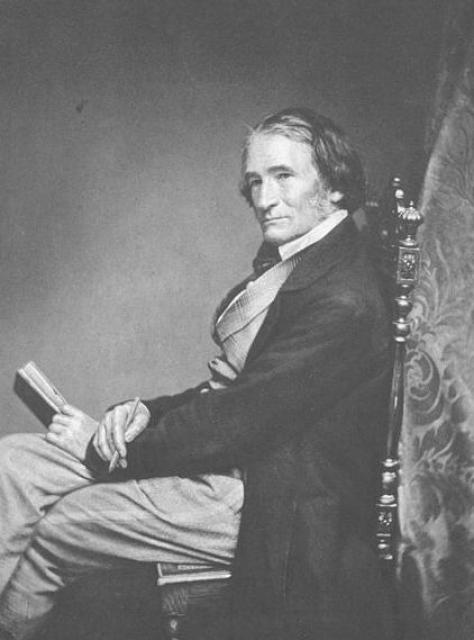
Joseph Karl Stieler
 Germany
Biography of Josef Karl Stieler
Josef Karl Stieler was a German portrait painter who was born into the Stieler family in Mainz. His father, August Friedrich Stieler, was a seal engraver at the electoral mint in Mainz. The Stieler family was known for their artistic talents, including heraldic artists, engravers, and painters. Stieler began his artistic journey under the guidance of his father, who passed away in 1789. He continued to educate himself in pastels and miniatures.
At the age of 17, Stieler embarked on a trip to Würzburg where he studied under court artist Christoph Fesel for almost two years. Fesel had himself been a student of Anton Raphael Mengs. Under Fesel, Stieler learned the art of oil painting. He then went on to study at the Vienna Academy of Fine Arts under Heinrich Friedrich Füger and made his debut as a portrait painter.
From 1805 to 1806, Stieler traveled to Budapest and Warsaw where he was inundated with commissions. In 1807, he accepted an offer to move to Paris and work with François Gérard. Returning to Germany in 1808, Stieler established himself as an independent artist in Frankfurt.
In 1810, Stieler embarked on a long trip to Italy. After Rome, he arrived in Naples in 1811 where he painted a portrait of Joachim Murat. He stayed in Milan for an extended period at the court of Eugène de Beauharnais to paint portraits of his children for his father-in-law, Maximilian I Joseph, the King of Bavaria. The following year, King Maximilian I invited Stieler to his court in Munich, which became his home.
In 1816, Stieler was sent by his patron to the Viennese court to paint a portrait of Emperor Franz II. It was there that Stieler married Pauline Becker, a Russian-German woman, who gave birth to five children.
From February to April 1820, Stieler painted the portrait of Ludwig van Beethoven, which is arguably the most famous image of the great composer to this day. Beethoven, who considered the sittings with Stieler a punishment, only agreed to pose for him because the patrons of the portrait were Beethoven's friends, Franz and Antonie Brentano. However, the composer's patience ran out before the scheduled sittings were completed, and Stieler had to finish the hands based on his memory. In 1967, Andy Warhol used this painting as the basis for his images of Beethoven.
In 1820, Stieler returned to Munich and was appointed as a court painter by King Ludwig I. In 1821, on the night before her burial, Stieler painted the portrait of Caroline, the younger daughter of Maximilian I.
For King Ludwig I, Stieler created the famous "Gallery of Beauties" at Nymphenburg Palace. In 1828, on the request of Ludwig, Stieler also painted the well-known portrait of Johann Wolfgang von Goethe. Stieler's body of work also includes portraits of Friedrich Wilhelm Joseph Schelling, Ludwig Tieck, Alexander von Humboldt, and the family of King Maximilian I.
In 1824, Stieler became a co-founder of the Munich Art Union. In 1833, he married the poetess Josephine von Miller. They had three children: Ottilie, future artist Eugen von Stieler, and future writer Karl Stieler. Stieler's nephew and student was Friedrich Dürck.
Stieler spent his last years in Tegernsee, where he built a summer house on a plot of land gifted to him by the king in 1829.


