Stefan Lochner
 Germany
- Stephan Lochner: A Pioneer of German Art
- Artistic Influences and Style
- Major Works and Chronology
- "The Adoration of the Magi"
- Later Works and Legacy
Stephan Lochner: A Pioneer of German Art
Early Life and TrainingStephan Lochner was a German painter and one of the foremost artists of the transitional period from Gothic to Renaissance. Born in Constance, Swabia, around 1400, his early life and artistic training remain shrouded in obscurity. He first appears in Cologne in 1442, where he became a respected member of the city council.
Artistic Influences and Style
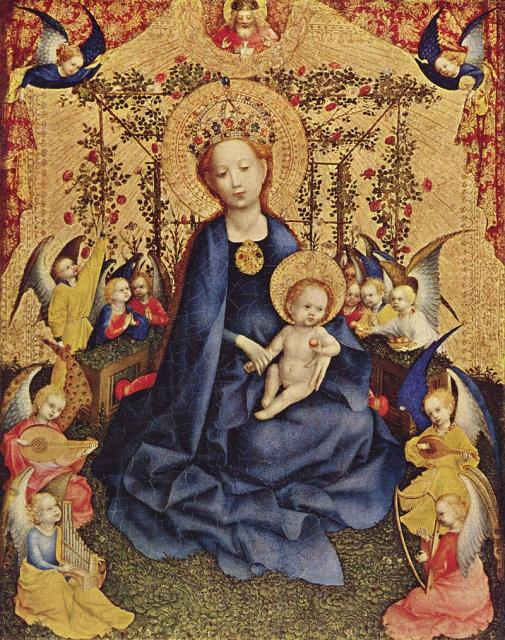
Lochner's artistic style reveals a synthesis of German and Netherlandish influences. He likely received his initial training in his native Swabia, but later moved to Cologne, where he absorbed local artistic traditions. His work was also influenced by the art of Upper Rhine painters like Konrad of Soest and the innovative techniques of Early Netherlandish artists such as Jan van Eyck and the Master of Flémalle.
Major Works and Chronology
Lochner's earliest surviving works include "The Virgin and Child" (c. 1435) and the "Last Judgment" altarpiece (c. 1435-1440). The latter reflects the influence of medieval artistic conventions, but also introduces innovative elements such as the dynamic figures and naturalistic details.
In 1445, Lochner created the "Altar of the Virgin" (panels now in Munich and Lisbon). The following year, he completed the central panel of the "Altarpiece for the Teutonic Order" (1447) in Darmstadt. These works demonstrate Lochner's mastery of perspective, spatial construction, and vibrant colors.
"The Adoration of the Magi"
Lochner's masterpiece, "The Adoration of the Magi" (c. 1440), is a magnificent altarpiece that includes a central panel depicting the Adoration scene, flanked by panels of saints and the Annunciation. This work showcases Lochner's refined composition, delicate colors, and attention to individual expression.
Later Works and Legacy
Lochner's later works include the "Presentation in the Temple" (1447) and the altarpiece for the church in Wildenburg (c. 1404 or 1414). These works exemplify Lochner's ability to harmonize Gothic and Renaissance elements, creating a unique and enduring artistic style.
Stephan Lochner died in Cologne in 1451 during the Black Plague. His work had a profound influence on subsequent German art and helped to pave the way for the Renaissance in the Holy Roman Empire. He remains one of the most celebrated and enigmatic figures in the history of German painting.