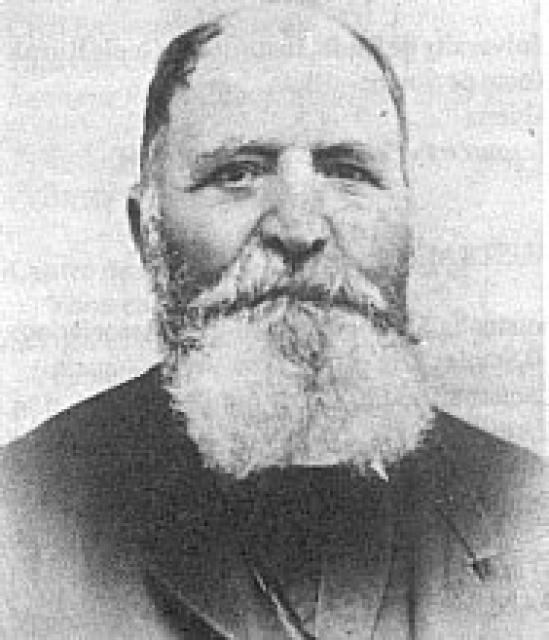
Joseph Monier
 France
- Joseph Monier: The Pioneer of Reinforced Concrete
- The Search for a New Material
- The Birth of Reinforced Concrete
- A Legacy of Innovation
Joseph Monier: The Pioneer of Reinforced Concrete
Joseph Monier, born in 1823 in France, is renowned as one of the inventors of reinforced concrete. Despite starting his career as a gardener, Monier made significant contributions to the field of construction and engineering through his relentless experimentation and innovative spirit.
The Search for a New Material
Working as a gardener at the Versailles gardening company, Monier encountered a common problem: traditional clay pots and barrels used for planting were heavy and fragile. Reinforcement could only be achieved by increasing the thickness of the walls, making them impractically heavy. On the other hand, wooden containers were short-lived and prone to decay.
Seeking a solution, Monier began experimenting with reinforced concrete around 1861. He used steel wire as reinforcement and cement-sand mortar as the main material. Although his first attempts resulted in cracks, Monier was determined to save his experimental containers.
The Birth of Reinforced Concrete
To prevent further damage, Monier decided to use a metal frame made of wire to reinforce his containers. This innovation, similar to the wooden barrels held together by metal hoops, became Monier's first form of reinforcement. As the wire rusted over time, it caused rust stains on the concrete surface. However, Monier simply coated the container, including the wire reinforcement, with cement mortar, restoring its original appearance.
The unique combination of metal and concrete allowed Monier to create a fundamentally new construction material, which he called "ferro-cement" or iron cement. The principles of creating reinforced concrete remain the same to this day – cement or concrete with ribbed reinforcement instead of wire, but the essence remains unchanged. On July 16, 1867, Joseph Monier received a patent for his portable garden containers made of a metal frame and cement mortar, marking the beginning of his continuous experiments with the new material.
A Legacy of Innovation
Monier's experiments with reinforced concrete did not end there. In 1868, he constructed a small ferro-cement swimming pool in Maisons-Alfort, making it the first concrete swimming pool in history. That same year, he obtained a patent for the world's first ferro-cement pipes and liquid reservoirs. In 1869, he applied for a patent for ferro-cement panels and partitions. Also in 1869, he built a ferro-cement roof above his experimental workshop. Monier's list of patents related to reinforced concrete continued to grow throughout the years, including bridges, beams, and sleepers.
Despite his lack of formal engineering or construction training, Monier's inventiveness and tenacity led to significant advancements in the field of reinforced concrete. His pioneering work paved the way for the construction material that now ranks among the top inventions of humanity. Although the status of Monier as the sole pioneer of reinforced concrete has been questioned in modern times, with William Wilkinson of England and François Coignet of France also making notable contributions, his name remains firmly associated with the development of this revolutionary building material.


