Willis Carrier
 USA
USABiography of Willis Carrier
Willis Haviland Carrier was an American engineer and inventor who is credited with the invention of modern household and automotive air conditioners. He was born on November 26, 1876, in Angola, New York. Carrier's ancestors arrived in America in the 17th century and his family lived in New England until his great-grandfather moved to Madison County, New York, in 1799. In 1836, his family purchased a farm in Erie County, where Carrier spent his childhood and youth.

Carrier's father, Duane Williams Carrier, taught music to Native Americans, managed a store, worked at the post office, and eventually returned to farming. His mother, Elizabeth Haviland, came from a Quaker family and instilled in Carrier a love for learning. She passed away in 1887 when Carrier was just 11 years old, but he had already developed a passion for education, while his father constantly engaged him in construction and inventing devices to improve farm life. Carrier's talent helped overcome financial difficulties, and in 1901, he graduated from the prestigious Cornell University with a bachelor's degree in engineering.
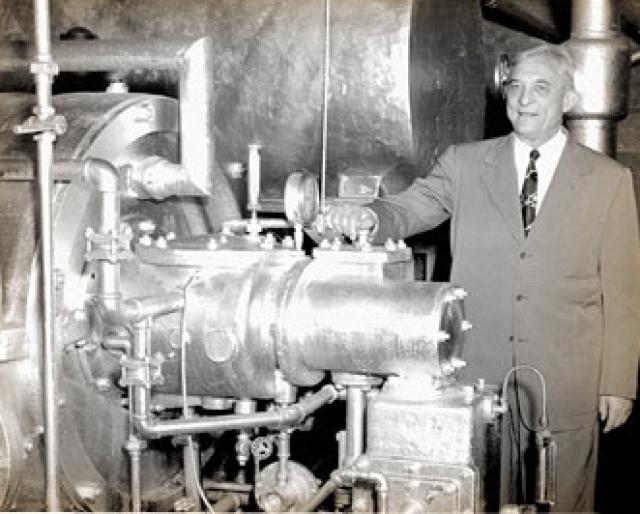
The Invention of Air Conditioning
On July 17, 1902, in response to a problem described by the Brooklyn company 'Sackett-Wilhelms Lithographing & Publishing Company', Willis Carrier provided blueprints for a device that became the world's first air conditioning system. This invention fulfilled all four requirements: temperature control, humidity control, air circulation and ventilation, and air purification. After several years of testing, Carrier patented his invention on January 2, 1906, under the name "Apparatus for Treating Air." This device could humidify or dehumidify air by heating or cooling water.
On December 3, 1911, Carrier presented the most significant work on air conditioning, called "Rational Psychrometric Formulae," at the annual meeting of the American Society of Mechanical Engineers. This document linked the concepts of relative humidity, absolute humidity, and dew point temperature, enabling the creation of air conditioning systems that precisely met the requirements.
Establishing Carrier Corporation
With the start of World War I, the Buffalo Forge Company, where Carrier had worked for 12 years, decided to limit its activities to manufacturing and closed its research department. As a result, Carrier and seven other young engineers pooled their savings of $32,600 and established the Carrier Engineering Corporation in June 1915. The company was based in Newark, New Jersey. Despite the production of refrigeration machines and the increasing demand for air conditioning systems, the company faced financial difficulties after the Wall Street Crash in 1929. In the following year, it merged with two other similar companies and became the "Carrier Corporation," with Carrier as the chairman of the board.
Unfortunately, the Great Depression slowed down the adoption of residential and commercial air conditioning systems. However, at the 1939 New York World's Fair, Willis Carrier showcased the benefits of his invention to visitors, providing them a glimpse into the future. The popularity of air conditioners soared during the post-war economic boom in the 1950s. Carrier also established "Toyo Carrier" and "Samsung Applications" in Japan and Korea in 1930. South Korea is currently considered the world's largest producer of air conditioners.
Today, "Carrier Corporation" remains a global leader in the air conditioning industry. The company revolutionized the lives of Americans by making large-scale air cooling possible, leading to significant population growth in the Sun Belt states during the 1960s.