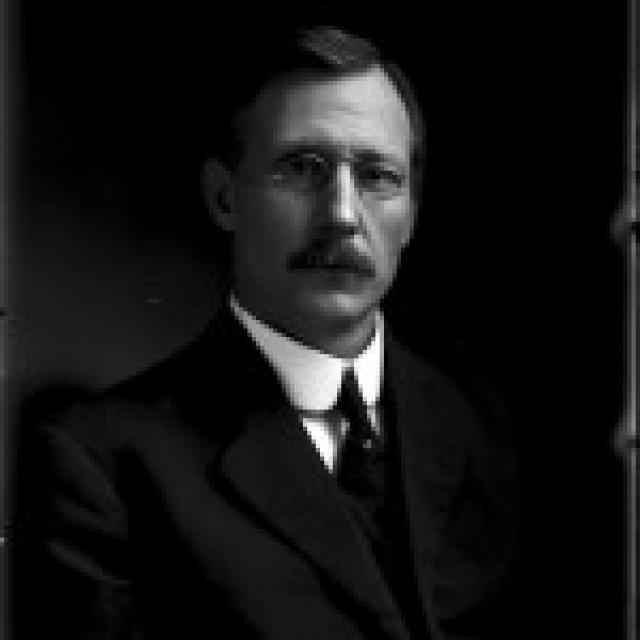
Joseph W. Bettendorf
 USA
USA- Biography of Joseph W. Bettendorf
- Early Life and Career
- Founding of Bettendorf Axel Company
- Growth and Innovation
- Leadership and Legacy
Biography of Joseph W. Bettendorf
Joseph W. Bettendorf was an American businessman who played a significant role in the growth and success of the Bettendorf Axel Company. He was born on October 10, 1864, in Leavenworth, Kansas, as the third child and second son of Michael Bettendorf and Catherine Reck. His father, originally from the Eifel region in Germany, immigrated to the United States at the age of 17.
Early Life and Career
At the age of nine, Joseph's family moved to Peru, Illinois, where he received most of his education. Starting as a machine operator in one of the factories, he worked his way up to become a master in the assembly department. In 1886, Joseph and his brother William opened the Bettendorf Metal Wheel company in Davenport, Iowa. Although Joseph initially held a lower position, he eventually became a controller at the factory.
Founding of Bettendorf Axel Company
After three years in Springfield, Ohio, where Joseph managed one branch of the family business, he returned to Davenport to establish the production of all-steel railroad cars with his brother. They celebrated the opening of their new enterprise, Bettendorf Axel Company, in January 1885. William became the company's first president, while Joseph served as secretary and manager.
Growth and Innovation
Two fires in 1902 destroyed the factory completely. However, the citizens of Gilbert, located three miles east of Davenport, managed to raise approximately $15,000 to buy an old farm. The Bettendorf brothers decided to build a new plant in Gilbert, and a year later, the residents wanted to rename their town Bettendorf. Joseph took charge of the company's financial department in the new location.
The new factory, covering 70 acres of land, initially produced agricultural implements. The company's growth accelerated after William designed a convenient all-steel railroad truck, cast from a single piece of steel. This innovation eliminated delays and derailments caused by bolts. By 1909, the factory had tripled in size and housed two open-hearth furnaces capable of producing up to 100 tons of finished steel castings used in the construction of railroad cars. At the beginning of the 20th century, Bettendorf Axel Company manufactured 29 different mechanisms and tools.
Leadership and Legacy
In 1910, William passed away, and Joseph assumed leadership of the company. While William was known as the inventor of many products launched by the Bettendorf Axel Company, Joseph possessed exceptional business acumen and was responsible for the company's expansion and financial growth.
The factory workers labored ten hours a day, six days a week, with a one-hour lunch break. Some workers and laborers earned $40-50 per week. Additionally, the Bettendorf brothers created a "family atmosphere" for their employees. The company organized monthly picnics and sports competitions for workers and their families.
The Great Depression took a toll on the Bettendorf factory, and it closed in 1932, a year before Joseph's death. Joseph married Elizabeth Ohl in 1888, and they raised two sons. He built a mansion on 17 acres of land overlooking the city and the Mississippi River valley, which is now listed on the National Register of Historic Places. Joseph Bettendorf passed away in May 1933 and was buried at Oakdale Cemetery in Davenport.


