Josiah
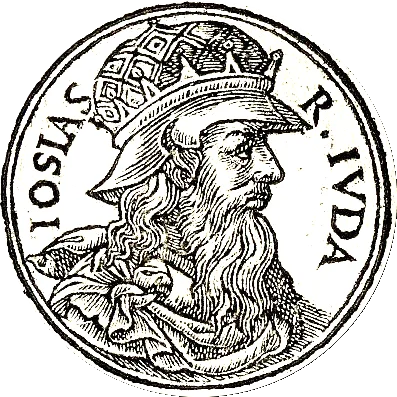
Josiah was a king of Judah who ruled from Jerusalem for about three decades in the late seventh century BCE, conventionally dated to 640–609 BCE. Remembered especially for a sweeping religious reform, he is presented in the Hebrew Bible as a ruler who sought to bring worship in Judah under the authority of the Jerusalem Temple and the covenant. His reign unfolded as Assyrian power in the region waned, and ended with his death at Megiddo during an encounter with Egypt.
A child on the throne
According to the biblical books of Kings and Chronicles, Josiah became king at eight years old after his father, Amon, was assassinated. He reigned for thirty-one years. The sources place his rule during a period of major political change, as the Assyrian Empire weakened and Egypt and Babylonia competed for influence across the Levant.
The biblical accounts are the principal narratives about his life. They present him as a reforming king, though the details and reach of his policies are interpreted differently by historians. Archaeological evidence offers context for Judah’s political and religious world, but does not independently confirm every element of the reform story.
The reform and the Book of the Law
The account in 2 Kings says that, in Josiah’s eighteenth year, workers repairing the Temple of Jerusalem found a “Book of the Law.” After the book was read to him, Josiah called an assembly, renewed the covenant, and ordered the removal of objects associated with the worship of other deities. He also centralized public worship at the Jerusalem Temple and extended his campaign into parts of the former northern kingdom of Israel.
The reforms made Josiah a defining figure in biblical memory. The books of Kings praise him as exceptionally devoted to the law of Moses. Scholars have long debated the identity and date of the discovered book and how much of the reform described in the texts can be established historically. Many connect it with an early form of Deuteronomy, while recognizing that the biblical narrative also expresses later theological interpretations of Judah’s past.
Megiddo and his death
Josiah’s reign ended in 609 BCE, when Pharaoh Necho II led Egyptian forces north. The biblical account says Josiah went to meet him at Megiddo and was killed. The precise circumstances and his motives remain uncertain; scholars have proposed that he sought to block Egypt’s passage or defend Judah’s independence as larger empires struggled for control.
His death was a turning point for Judah. His son Jehoahaz succeeded him briefly before Necho removed him and installed another son, Jehoiakim, imposing tribute on the kingdom. Within a few decades, Babylon conquered Jerusalem and destroyed the First Temple, bringing the kingdom of Judah to an end.
Legacy
Josiah occupies an enduring place in Jewish and Christian traditions as a model of religious commitment and reform. Historically, he ruled at a moment when imperial power was shifting and Judah had a rare opportunity to assert greater autonomy. The biblical portrayal of his policies shaped later accounts of religious centralization and covenant, while the circumstances of his death remain a reminder of how exposed the small kingdom was to the rival powers surrounding it.