Jozef Simmler
 Poland
- Early life and artistic training
- Portraits and a Warsaw career
- The Death of Barbara Radziwiłł
- Institution builder and final years
Józef Simmler was one of the leading Polish painters of the nineteenth century, admired for portraits that seemed to preserve every texture and detail and for historical scenes that brought the past into the present. His best-known painting, The Death of Barbara Radziwiłł, became one of the most widely reproduced works in Polish art. He was also among the founders of Warsaw’s Society for the Encouragement of Fine Arts, an institution created to support Polish artists and exhibitions.
Early life and artistic training
Simmler was born in Warsaw on March 14, 1823, into a family of merchants. He began drawing lessons in the city and showed early promise. In 1841 he traveled to Dresden to study art, where he earned a silver medal for drawing during his first year. He later studied in Munich and returned to Dresden, hoping to learn from the history painter Eduard Bendemann. Illness interrupted his training, but he resumed his studies after recovering in Switzerland.
In 1845 he returned to Warsaw and exhibited a historical painting, Joseph and Potiphar, at the Public Exhibition of the School of Fine Arts. He later traveled to Paris, where he studied works at the Louvre and Luxembourg Gallery and encountered the paintings of Paul Delaroche and Charles Gleyre. These experiences brought him into contact with the academic and historical traditions that would shape his work, while he continued to develop a polished, closely observed style of his own.
Portraits and a Warsaw career
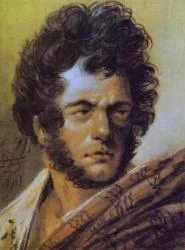
By the late 1840s, Simmler had settled back in Warsaw. He married Julia Hoegensteller in Munich in 1850, and the couple made their home in the city. Portraits became a major source of work. He painted relatives, artists, merchants, officials and members of the aristocracy, often using a dark, plain background that directed attention to the sitter’s face and clothing.
Simmler was celebrated for his careful rendering of fabrics, jewelry and other details, as well as his ability to convey a sitter’s likeness. The success of his portrait commissions brought him financial security and social standing. Among his notable works from this period are portraits of Jadwiga Łuszczewska, known by the literary name Deotyma, and Portrait of Emilia Włodkowska, an imposing full-length image completed in 1865.
He also painted subjects drawn from religion and Polish history. After the January Uprising of 1863, he produced works that reflected the loss and mourning felt under Russian rule. In the allegorical painting Sappho on the Top of Leucadia, for example, he changed his wife’s Greek costume to mourning dress and transformed the background into a turbulent landscape.
The Death of Barbara Radziwiłł
In 1860, Simmler completed the painting that would secure his lasting fame: The Death of Barbara Radziwiłł. It depicts Barbara, the young queen and wife of King Sigismund II Augustus, at the moment of her death. The story of their love, secret marriage and brief reign had already inspired literature and art, and Simmler selected a deeply intimate moment rather than a grand public scene.
The painting was commissioned by collector Leopold Burczak-Abramowicz. Its success with viewers and critics was so strong that a public committee raised funds to acquire it and present it to the Society for the Encouragement of Fine Arts. The society reproduced the image in lithographs, and it circulated widely through prints and publications. The original is now held by the National Museum in Warsaw.
Institution builder and final years
Simmler joined fellow artists who sought a permanent institution for exhibitions and support of the arts in Warsaw. Their efforts led to the founding of the Society for the Encouragement of Fine Arts in 1860, and Simmler served on its committee until his death. The organization helped create a public platform for Polish artists at a time when the country was partitioned and lacked an independent state.
In his final years, Simmler worked increasingly on religious paintings and historical commissions, including The Oath of Queen Jadwiga, made for the 1867 Paris Exposition. He died of typhus in Warsaw on March 1, 1868, aged 44. His career left a durable mark on Polish painting: through portraits of his contemporaries, historical images that spoke to national memory, and an institution that helped Polish art reach a wider public.