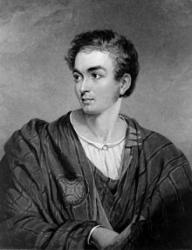
Jules Dumont D'Urville
 France
- Jules Sébastien César Dumont d'Urville
- Early Life and Education
- Naval Career
- Mediterranean Explorations
- First Circumnavigation
- Discovery of La Pérouse's Fate
- The Wreckage of "Astrolabe" and "Boussole"
- Later Life and Legacy
Jules Sébastien César Dumont d'Urville
Jules Sébastien César Dumont d'Urville was a renowned French explorer, navigator, oceanographer, naval officer, and scientist.
Early Life and Education
Dumont d'Urville was born in Calvados, France, in 1790. His father, a judicial official, died in 1797, leaving his upbringing to his uncle, Abbot Croizet. Influenced by the works of Rousseau, his mother instilled in him a love for the outdoors, physical activity, and healthy living. He excelled in his studies, particularly in languages, which fueled his lifelong passion for exploration and translation.
Naval Career
After failing the entrance exam for the Polytechnique, Dumont d'Urville embarked on a naval career. Beginning as a sailor, he swiftly rose through the ranks, earning the titles of midshipman and lieutenant. His desire to explore India was fulfilled when he was appointed to the "Amazone" in 1810.
Mediterranean Explorations
In 1819, Dumont d'Urville was assigned to the "La Chevrette" for an expedition to the Mediterranean. He was tasked with studying botany, entomology, and archaeology. In 1820, he witnessed the discovery of the "Venus de Milo" on Milos. Although he was unable to purchase the statue, he played a role in its acquisition by France, where it became a celebrated masterpiece.
First Circumnavigation
From 1822 to 1825, Dumont d'Urville commanded the corvette "La Coquille" on a circumnavigation. He traveled to Tenerife, Brazil, Australia, New Guinea, New Zealand, and various islands in the Pacific, including Tahiti. His scientific findings were significant, and he was promoted to captain of the second rank.
Discovery of La Pérouse's Fate
Dumont d'Urville's second circumnavigation began in 1826 aboard the renamed "Astrolabe." His primary mission was to locate the missing expedition of Jean-François Galaup de La Pérouse. Guided by artifacts recovered by others, he conducted a thorough search in Oceania. In 1827, he met with Peter Dillon, who had discovered several relics of La Pérouse's ships.
The Wreckage of "Astrolabe" and "Boussole"
After identifying Vanikoro as the probable site of the shipwreck, Dumont d'Urville discovered submerged cannons, anchors, and other artifacts from "Astrolabe." Despite extensive efforts, the remains of "Boussole" could not be located. To honor the memory of the lost French sailors, a monument was erected from coral slabs, and a gun salute was fired.
Later Life and Legacy
Dumont d'Urville returned to France in 1829 as a celebrated explorer. He continued to publish his scientific findings and served as a member of the French Geographical Society. His contributions to navigation, oceanography, and anthropology were immense, earning him a place among the greatest explorers of his time. He died in 1842, leaving behind a remarkable legacy of scientific discovery and geographical knowledge.