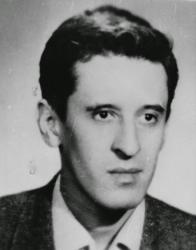
Jules Laforgue
 France
- Jules Laforgue: A Life in Poetry and Symbolism
- Early Life and Literary Beginnings
- Failure and Literary Debut
- Berlin and Literary Maturity
- Marriage, Fame, and Death
- Influence and Legacy
Jules Laforgue: A Life in Poetry and Symbolism
Jules Laforgue was a prominent French Symbolist poet whose unique blend of lyricism, irony, and parody left an enduring mark on the literary landscape.
Early Life and Literary Beginnings
Laforgue was born in Montevideo, Uruguay, to French émigrés. At the age of ten, he returned to France with his father and resided in Tarbes. Despite infrequent contact with his parents and the untimely death of his mother, Laforgue showed an early aptitude for literature.
Failure and Literary Debut
Laforgue attempted to obtain a philosophy degree in Paris but failed the entrance exam. Disillusioned, he turned to writing and made his literary debut in Toulouse in 1879. He became affiliated with the Hydropathes, a literary group, and befriended fellow poet Gustave Kahn.
Berlin and Literary Maturity
From 1881 to 1886, Laforgue resided in Berlin, where he held a position as a reader of French novels and newspapers for Empress Augusta. During this time, he developed his signature style, influenced by the work of Walt Whitman. Laforgue introduced free verse to French poetry, contributing to its evolution.
Marriage, Fame, and Death
Upon his return to Paris, Laforgue married a young Englishwoman. However, his happiness was short-lived as he was diagnosed with tuberculosis. Despite his illness, he published three books: two poetry collections and a dramatic poem. Although not initially recognized as a "cursed poet" by Paul Verlaine, Laforgue's work gained posthumous acclaim.
Influence and Legacy
Laforgue's ironic and parodic approach to poetry profoundly influenced American modernists such as Ezra Pound and T. S. Eliot. His work continues to be celebrated and translated into numerous languages, including Russian by renowned poets such as Valery Bryusov and Ilya Ehrenburg. Composers such as Arthur Honegger and André Souris have set Laforgue's verse to music.