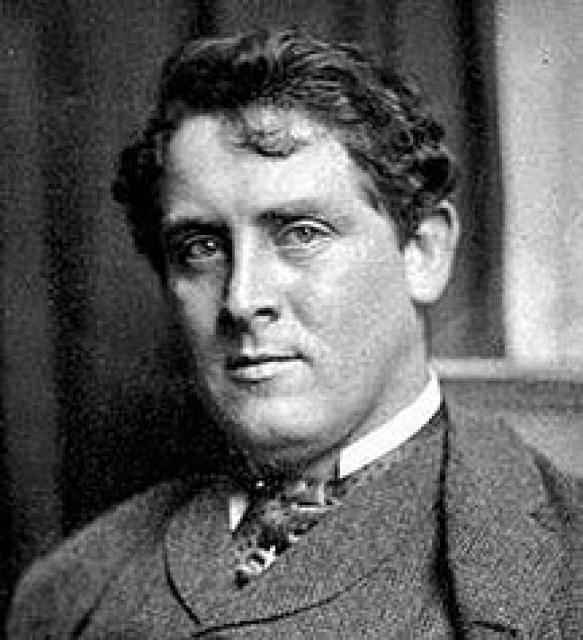
Julian Alden Weir
 USA
USA- Julian Alden Weir: American Impressionist Master
- European Education and Inspiration
- Return to America and Artistic Expansion
- Embracing Impressionism
- Recognition and Artistic Evolution
- Later Career and Legacy
Julian Alden Weir: American Impressionist Master
Early Life and InfluencesJulian Alden Weir was born into a family of artists. His father, Robert Walter Weir, was a painter and professor at the West Point Military Academy. His brother, John Ferguson Weir, was a renowned artist and director of the Yale School of Fine Arts from 1869 to 1913.
Initially, both brothers received painting lessons from their father. Julian later enrolled at the National Academy of Design in New York City.
European Education and Inspiration
From 1873 to 1877, Weir traveled to Europe to study art in Paris. During this time, he exhibited his work in the Paris Salon for the first time. However, he remained critical of the emerging Impressionist movement and artists like James Whistler.
Return to America and Artistic Expansion
Returning to New York City in 1877, Weir co-founded the Society of American Artists, serving as president from 1882. He taught at Cooper Union and the Art Students League, and painted portraits, genre scenes, and still lifes featuring flowers.
Embracing Impressionism
Influenced by the works of Édouard Manet and the exhibition of French Impressionists in New York, Weir began painting in an Impressionist style in 1886. He created landscapes inspired by his surroundings in Branchville, Connecticut. His friend John Henry Twachtman joined him in this endeavor.
Recognition and Artistic Evolution
In 1888, Weir's painting "Idle Hours" was acquired by the Metropolitan Museum of Art. He won a silver medal at the Paris Exposition Universelle in 1889. Throughout his career, he developed his unique artistic style, incorporating elements from Japanese prints.
Later Career and Legacy
Weir became an advocate for contemporary European art in the United States, particularly French art. He led the Association of American Painters and Sculptors and received an award at the St. Louis World's Fair in 1904.
In 1913, Weir co-organized the groundbreaking Armory Show in New York City, showcasing his work alongside many others. He remained an Impressionist throughout his career, becoming president of the National Academy of Design in New York City in 1915. A biography, "The Life and Letters of J. Alden Weir," was published in 1960, written primarily by his daughter, Dorothy Weir Young.



