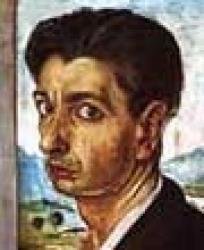
Mihail Savitskiy
 Belarus
- Biography of Mikhail Savitsky
- Early Life and World War II
- Artistic Career
- Controversial Painting
- Awards and Recognition
- Death
Biography of Mikhail Savitsky
Mikhail Andreevich Savitsky was a Soviet and Belarusian artist. He was born on February 18, 1922, in the village of Zvenyachi, Tolochin district, Vitebsk region, BSSR.
Early Life and World War II
During World War II, Savitsky experienced the hardships that came with the Great Patriotic War. At the age of 20, he participated in the battles for Sevastopol. He was captured early in the war and spent time in concentration camps, including Dusseldorf, Buchenwald, and Dachau. There is information that Mikhail actively fought in the Resistance. According to other sources, Savitsky narrowly escaped death in the concentration camps, as he was in a typhus barrack when the Allies liberated him. He spent 17 days in custody for organizing an escape and was categorized as a person to be destroyed.
Artistic Career
After the war, Savitsky entered the Minsk Art School and then graduated from the Surikov Moscow Art Institute in 1957. In his works, the artist often touched on historical and contemporary themes, revealing them through expression and emotion. Savitsky was a strong believer in realism. His works such as "Song," the series "Heroic Belarus," "Numbers on the Heart," the painting "Partisan Madonna," "Legend of Batka Mina," and "Children of War" were dedicated to the memory of those who died during the Great Patriotic War, while others celebrated Soviet patriotism.
Controversial Painting
One of his most controversial paintings, "Summer Theater," was considered an insult to all Jews by some. The canvas depicted a bulldozer dumping bodies into a pit, with two black figures - an SS officer and a prisoner with a Star of David on his chest. The term "summer camp" in the language of the fascists referred to this pit, where people were thrown and killed with gas before being burned. As art has the power to generalize and convey deep meaning through symbols, the Jewish prisoner from the painting was seen as representing the entire Jewish nation. It was as if Jews were collaborating with the camp executioners and helping to commit horrific acts.
However, Savitsky explained to those who had never experienced the horrors of concentration camps that the prisoner from the Sonderkommando was also a victim. The Sonderkommando were Jewish prisoners forced to handle corpses and then cremate them. They had to do this day after day. Eventually, the Sonderkommando prisoners were executed as witnesses. Mikhail was asked to remove the identifying mark from the chest of the prisoner in the painting, but he remained steadfast. He preferred to convey the harsh realities he witnessed firsthand, even if it could be interpreted ambiguously.
Awards and Recognition
In 1972, Savitsky became a People's Artist of the BSSR, and in 1978, a People's Artist of the USSR. He was a member of the Russian Academy of Arts and the National Academy of Sciences of Belarus. In 1973, he became the first recipient of the Order of Francysk Skaryna, established by the resolution of the Supreme Soviet of the Republic of Belarus. On March 1, 2006, Mikhail was awarded the title of "Hero of Belarus."