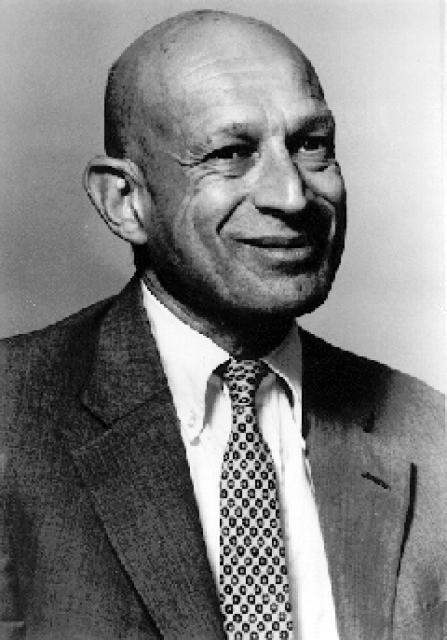
Julian Lincoln Simon
 USA
USABiography of Julian Lincoln Simon
Julian Lincoln Simon was an American economist, professor of business administration at the University of Maryland, and a senior fellow at the Cato Institute. He previously taught at the University of Illinois at Urbana-Champaign. Simon was well-known for his writings on population, immigration, and natural resources. His works expressed an optimistic cornucopian view on the sustainable economic effects of resource exploitation and population growth, believing that human ingenuity, substitutes, and technological progress would overcome resource constraints and depletion. He also shared the views of libertarians, advocating against government regulation.
Simon gained fame for his involvement in the Simon-Ehrlich wager. Ecologist Paul R. Ehrlich argued that metal prices would increase more than fivefold within ten years, while Simon disagreed. Simon won the bet as metal prices sharply declined during that time. Born on February 12, 1932, Simon graduated from Harvard University with a bachelor's degree in experimental psychology in 1953. He later earned a master's degree in business administration from the University of Chicago in 1959 and a doctorate in business economics from the same institution in 1961. In 1998, the University of Navarra awarded him an honorary doctorate in economics.
Julian Simon passed away on February 8, 1998, at the age of 65, due to a heart attack in Chevy Chase, Maryland. He was married to Rita James Simon, who was also a long-time faculty member at the University of Illinois at Urbana-Champaign and later became a professor of public administration at American University in Washington, D.C.
Simon suffered from chronic depression, which allowed him to work productively for only a few hours a day. He even studied the psychology of depression and wrote a book on overcoming it. One of his main pieces of advice was for individuals to stop comparing themselves to others when they feel worse and worse. One of Simon's notable works on natural resource economics was his book 'The Ultimate Resource,' published in 1981. In this book, he criticized the panic surrounding population growth and resource consumption, arguing that innovation markets would prevent depletion and scarcity. His ideas received praise from Nobel laureates Friedrich Hayek and Milton Friedman but also faced criticism from Albert Bartlett and Paul Ehrlich, leading to the famous Simon-Ehrlich wager, which Ehrlich lost.
Simon wrote memoirs titled 'A Life Against the Grain,' which were published by his wife after his death.