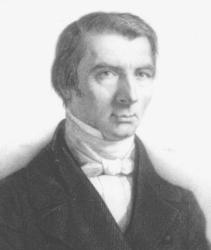
William Phillips
- Early Life and Education
- Wartime Experiences
- London School of Economics and MONIAC
- Phillips Curve and Economic Legacy
- Later Life and Return to New Zealand
Early Life and Education
Alban William Housego "Bill" Phillips was born on November 18, 1914, in rural New Zealand. After leaving school, he embarked on a series of adventures in Australia, including working as a crocodile hunter. In 1937, Phillips traveled to China, where he studied electronics.
Wartime Experiences
During World War II, Phillips joined the Royal Air Force and was stationed in Singapore. After the fall of Singapore, he escaped to Java, where he was captured by Japanese forces. He spent 3.5 years as a prisoner of war in Indonesia, where he learned Chinese, miniaturized a radio, and ingeniously brewed tea using the camp's lighting system.
London School of Economics and MONIAC
After the war, Phillips enrolled in sociology at the London School of Economics (LSE). He soon switched to economics and became a professor for 11 years. As a student at LSE, Phillips applied his engineering background to develop MONIAC, an analog computer used to simulate the British economy. This invention gained widespread recognition and led to his appointment as a teaching fellow at LSE.
Phillips Curve and Economic Legacy
In 1958, Phillips published his seminal work on the relationship between inflation and unemployment, which became known as the "Phillips Curve." This influential theory suggests an inverse relationship between these economic indicators. The Phillips Curve became a cornerstone of macroeconomic analysis, although it has undergone modifications over time. If Phillips had lived longer, he may have been considered a potential Nobel laureate for his economic contributions.
Later Life and Return to New Zealand
In 1967, Phillips returned to Australia to work at the Australian National University, where he pursued his interest in Chinese studies. However, the effects of his wartime experiences and heavy smoking took their toll. In 1969, he suffered a stroke and returned to Auckland, New Zealand. There, he taught at the University of Auckland until his death on March 4, 1975, at the age of 60.