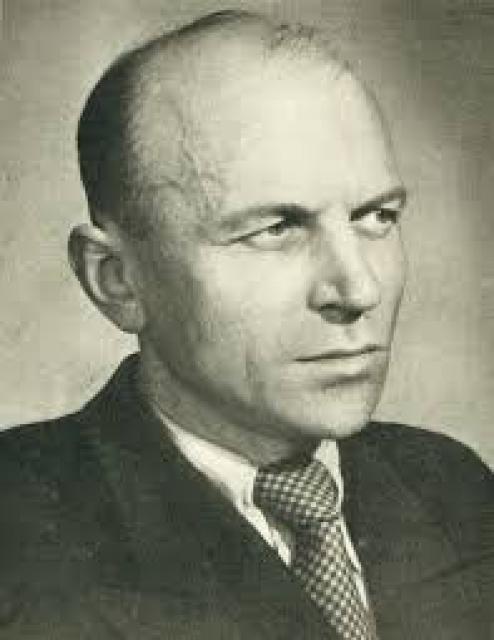
Juozas Baltusis
- Jonas Baltušis: Lithuanian Writer and Public Figure
- Early Life and Education
- Literary Career
- Public Life
- Literary and Cinematic Contributions
- Legacy
Jonas Baltušis: Lithuanian Writer and Public Figure
Jonas Baltušis was a renowned Lithuanian writer, screenwriter, and public figure who played a significant role in the literary and political landscape of his country.
Early Life and Education
Jonas Baltušis was born in Riga, Latvia, on May 16, 1909. Due to World War I, his family relocated to Russia, where Baltušis spent his childhood in Moscow, Nizhny Novgorod, and Tsaritsyn. In 1918, they returned to Lithuania, where Baltušis worked as a farm laborer.
Literary Career
Inspired by Kazys Boruta, Baltušis began writing in the early 1930s. His first short story was published in 1932. In 1940, his debut collection, "Savaitė prasideda gerai" (Week Begins Well), established him as a talented storyteller.
During World War II, Baltušis worked as an editor for the Lithuanian-language broadcasts of Moscow Radio, writing stories and radio plays that encouraged resistance against the Nazi occupation.
After the war, Baltušis emerged as a prominent figure in the Lithuanian literary scene. He served as editor-in-chief of the journal "Pergalė" (Victory) from 1946 to 1954. His short story collections, including "Baltieji dobiliukai" (White Clover) and "Kas dainon nesudėta" (What the Song Does Not Sing), explored themes of social injustice and human relationships.
Public Life
Baltušis's literary success extended into the realm of public service. He was elected as a member of the Supreme Council of the Lithuanian SSR between 1947 and 1975, and again from 1980 to 1986. From 1959 to 1967, he served as Deputy Chairman of the Presidium of the Supreme Council.
Baltušis actively participated in the Committee for the Defense of Peace in Lithuania and advocated for the country's independence. However, he remained a staunch opponent of Lithuania's eventual secession from the Soviet Union.
Literary and Cinematic Contributions
Jonas Baltušis achieved widespread recognition for his novels, the most notable of which are "Parduotos vasaros" (Sold Summers) and "Sakmė apie Juzą" (Tale of Juzas). These works explored the complexities of life in Soviet Lithuania and the struggles of ordinary people.
Baltušis also co-wrote the screenplay for the film "Nad Nemanom rassvet" (Dawn Over the Nemunas) with Yevgeni Gavrilovich, which was directed by Alexander Faintsimmer in 1952.
Legacy
Jonas Baltušis's writings and public service left a lasting impact on Lithuanian society. His works were extensively translated into various languages, reaching readers around the world. Baltušis received numerous awards and accolades for his contributions to literature and the arts.
Today, Jonas Baltušis is remembered as a prolific writer whose works continue to resonate with audiences for their exploration of human experiences and the challenges of living in a turbulent era.