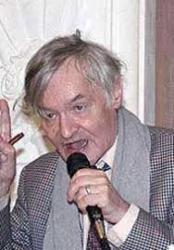
Sabit Donentaev
 Kazakhstan
- Early Life and Education
- Influences and Literary Beginnings
- 1915: "Everyday Trivia" and Fabulism
- Political and Social Activism
- 1917-23: Teacher, Party Activist, and Public Figure
- 1923: Literary and Journalistic Career
- Disillusionment and Legacy
- Literary Contributions and Themes
- Homage to Abai
- Women's Rights and Revolution
- Historical Perspective
- Novel: "Korkemtai"
Early Life and Education
1894: Birth in Humble OriginsSabit Donentayev was born in 1894 into a poor herder's family in the Akus Volost of the Pavlodar District in the Semipalatinsk Region. As a child, he received a Muslim education at the madrassah of Kasym-Khoja Ertysbayev.
Influences and Literary Beginnings
1913: Publication of First PoemsDonentayev's early literary influences included the works of the Russian fabulist Ivan Krylov, the Tatar classic Gabdulla Tukay, and the Kazakh poet Abai Kunanbayev. In 1913, his first poems appeared in the magazine "Aikap."
1915: "Everyday Trivia" and Fabulism
In 1915, Donentayev published his collection of poems, "Everyday Trivia," in Ufa. Influenced by Krylov, he also wrote numerous fables, such as "The Lark," "The Gray Hound," and "The Two Goats."
Political and Social Activism
1916-17: War and RevolutionIn 1916, Donentayev was conscripted for labor on the Eastern Front during World War I. After the February Revolution in 1917, he returned home.
1917-23: Teacher, Party Activist, and Public Figure
Donentayev became a teacher and joined the national movement led by the Alash party. He also participated in the organization of the communist party (VKP(b)) in Bayanaul and served as a people's judge.
1923: Literary and Journalistic Career
From 1923, Donentayev worked as a journalist for the newspaper "Kazakh Til," publishing articles and essays.
Disillusionment and Legacy
1933: Death After Prolonged IllnessDonentayev became disillusioned with the excesses of collectivization policies and the subsequent famine and repression. He left the Communist Party and died on May 23, 1933, after a prolonged illness.
Literary Contributions and Themes
Sociopolitical CommentaryDonentayev's poetry often addressed social issues, such as poverty, inequality, and injustice. His well-known poems include "High Mountain," "To Whom Does Our Time Belong," and "Thoughts."
Homage to Abai
In his poem "To Abai," Donentayev paid tribute to the founder of modern Kazakh literature, comparing him to "a precious diamond."
Women's Rights and Revolution
After the revolution, Donentayev advocated for women's rights and the abolition of the dowry system. His poems "Free Aisha," "Azat's Growth," and "Ulbolsyn and Dameteken" reflect these themes.
Historical Perspective
Donentayev's poetry praised the February and October Revolutions, but he accorded greater significance to the former. This is evident in his poem "On the 10th Anniversary of February."
Novel: "Korkemtai"
Donentayev's only major prose work was the novella "Korkemtai," which recounted the difficult life of an orphan.