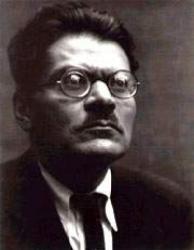
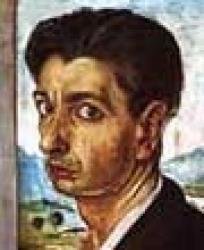
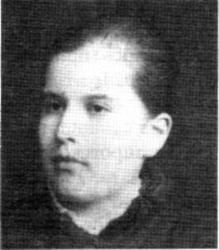
Juzef Chapskiy
 Poland
Biography of Józef Czapski
Józef Czapski was a Polish artist and writer, born in 1896. He was the son of the governor of Minsk and the cousin of G. Chicherin. Czapski spent his childhood in the Priluki estate near Minsk and completed his gymnasium education in St. Petersburg. He went on to study law at St. Petersburg University.
During his time in St. Petersburg, Czapski became closely associated with the circle of Zinaida Gippius. When World War I broke out, he served as a cavalry officer and was awarded the Order of Military Merit for his valorous actions.
After the war, Czapski pursued his passion for art. He studied at the Warsaw School of Fine Arts from 1918 to 1921 and then at the Krakow Academy of Fine Arts from 1921 to 1924. He continued his artistic education in France from 1924 to 1931 before returning to Poland.
On September 1, 1939, Czapski, being a reserve officer, was called up to the Polish Army. However, on September 27, he was captured by the Red Army near Lviv. He was held in a concentration camp in Starobilsk, Ukraine, and later in Gryazovets, Vologda Oblast. In September 1941, after the signing of a military agreement between the Soviet and Polish governments, Czapski was released and soon joined General Anders' Polish Army. He served as his envoy in the search for Polish officers who had disappeared in the Soviet Union.
In 1942, Czapski met Anna Akhmatova in Tashkent through A. N. Tolstoy. It is speculated that her poem "That night we went mad, separated from each other..." may have been dedicated to Czapski (they saw each other for the second and last time in 1965 in Paris). In 1943, he crossed over to Iran and fought on the Italian front. From 1945 onwards, he lived in France and actively participated in the publication of the well-known Polish journal "Kultura" under the editorship of E. Giedroyc, as well as in Vladimir Maximov's journal "Continent." Czapski wrote about D. S. Merezhkovsky, D. V. Filosofov, and A. M. Remizov, whom he was closely acquainted with. Alongside Czesław Miłosz, he was one of the first to introduce Simone Weil's philosophy to Polish readers.
Czapski authored memoirs about the Gulag, such as "Starobilsk Memories" (1944) and "On Inhuman Earth" (1949). He also wrote essays about post-impressionist artists, particularly his beloved Cézanne. Czapski acted as a consultant for Andrzej Wajda's film about the Katyn massacre.
Among his works are "Wspomnienia starobielskie" (1944), "Na nieludzkiej ziemi" (1949), "Tumult i widma" (1981), "Wyrwane strony" (1993), and "Dzienniki — wspomnienia — relacje" (1986).