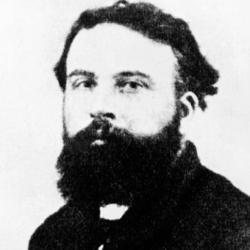
Kamal Molk
 Iran
Iran- Early Life and Education
- Court Artist to Nasser al-Din Shah
- European Influence and Travels
- Exile and Return
- Legacy
Early Life and Education
Muhammad Kamal-ol-Molk was born into a prominent and influential Kashani clan. His uncle was the renowned 19th-century Persian artist Abu'l Hasan Ghaffari, and his father, Mirza Bozorg Ghaffari Kashani, was a respected artist and founder of an art school. His brother, Abotorab Ghaffari, was also a talented painter.
From a young age, Muhammad displayed a keen interest in calligraphy and painting, decorating the walls of his childhood home with illustrations. Later, he pursued higher education at Dar al-Fonun (House of Arts), where he studied painting under the guidance of Mozaiyeno-ol-Dovleh, a renowned European-trained artist.
Court Artist to Nasser al-Din Shah
During his time at Dar al-Fonun, Muhammad's brilliance caught the attention of Shah Nasser al-Din. The Shah invited him to his court, where Muhammad rapidly honed his skills. To acknowledge his talent, the Shah bestowed upon him the title "Kamal-ol-Molk" (Perfection of the Kingdom), by which he became known.
Muhammad became the Shah's principal court artist, creating around 170 works during Nasser al-Din's reign. These included portraits of the Shah and high-ranking officials, scenes of royal receptions and hunts, and depictions of the Shah's palaces.
European Influence and Travels
Despite Shah Nasser al-Din's initial cautious Westernization efforts, his fascination with Europe deepened after his first visit to Vienna in 1873. This led to extravagant purchases and foreign loans, increasing Iran's dependence on foreign capital.
Muhammad's close relationship with the Shah made his transition to the reign of Muzaffar al-Din (1896-1907) difficult. He chose to travel to Europe, where he met contemporary artists and studied works by masters such as Raphael, Rembrandt, and Titian. After approximately four years in Europe, he returned to Persia.
Exile and Return
Courtly intrigue and opposition forced Muhammad to emigrate again, this time to Iraq. There, he created renowned works such as "The Goldsmith with His Apprentice" and "The Fortune Teller." After two years, he returned to Iran and became involved in the Constitutional Movement, painting notable portraits.
Legacy
Muhammad Kamal-ol-Molk's influence on Iranian art is profound. His depictions of Persian life, royal court, and elite society provide a valuable visual record of the late 19th and early 20th centuries. His experimentation with Western painting techniques and incorporation of European influences transformed Persian art and paved the way for modernism in Iran.