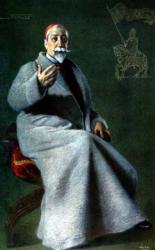
Karin Boye
 Sweden
- Karin Boye: A Trailblazing Swedish Writer
- Literary Beginnings and Activism
- Surrealism and the Founding of "Spectra"
- "Kallocain": A Dystopian Masterpiece
- Personal Struggles and Tragic End
- Legacy and Influence
Karin Boye: A Trailblazing Swedish Writer
Early Life and EducationKarin Boye was born in 1900 into a family of an engineer and an insurance company employee. Her father's unstable mental health left Boye's upbringing largely to her mother. In 1909, the family moved to Stockholm, where Boye excelled in her studies and eventually matriculated at Uppsala University in 1921.
Literary Beginnings and Activism
Boye's debut poetry collection, "Clouds," was published in 1922 while she was still a student. Throughout the 1920s, she was an active member of the socialist group "Clarté." Her significant translation of Thomas Mann's "The Magic Mountain" in 1929 further cemented her literary prowess.
Surrealism and the Founding of "Spectra"
In 1931, Boye co-founded the influential poetry journal "Spectra." She became an ardent advocate of surrealism and translated the works of T.S. Eliot. Boye also traveled extensively, visiting the Soviet Union in 1930 and residing in Berlin from 1932-1933.
"Kallocain": A Dystopian Masterpiece
Boye's experiences in Berlin profoundly influenced her writing. In 1940, she published her most celebrated work, the dystopian novel "Kallocain." Exploring themes of identity, freedom, and totalitarianism, the novel has been widely acclaimed, translated into numerous languages, and adapted into a television series.
Personal Struggles and Tragic End
Boye's personal life was marked by a series of unsuccessful relationships. In 1941, she found herself entangled in a love triangle involving German émigré Margo Hanéel and terminally ill Anita Nathorst. The emotional turmoil led Boye to leave the shared home and seek solace in nature. In October 1941, she was found dead in a forest near Alingsås, Sweden. Her death was ruled a suicide, with a vial of sedatives found nearby. Within months, both Hanéel and Nathorst also took their own lives.
Legacy and Influence
Karin Boye's literary legacy continues to inspire generations of writers. Her profound impact on Scandinavian poetry is evident in the works of poets such as Inger Hagerup, Harry Martinson, and Hjalmar Gullberg. The Karin Boye Society was established in Sweden in 1983, and in 2004, the library at Uppsala University was named after her. Boye's unwavering commitment to artistic expression and social justice remains a testament to her enduring relevance as a literary icon.