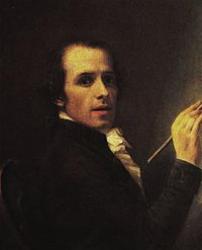
Karl Albiker
 Germany
- Karl Albiker: A Renowned German Sculptor, Printmaker, and Educator
- Parisian Influences
- Return to Germany
- Teaching and Artistic Recognition
- Architectural Projects and the Nazi Era
- Post-War Life and Legacy
Karl Albiker: A Renowned German Sculptor, Printmaker, and Educator
Early Life and EducationKarl Albiker was born in Karlsruhe, Germany.He began his artistic training at the Academy of Fine Arts Karlsruhe, where he befriended expressionist painter Karl Hofer. Albiker subsequently studied at the Académie Julian in Paris from 1899 to 1900 and later in the atelier of Antoine Bourdelle. In Paris, he also met Auguste Rodin, who became an influential teacher to Albiker.
Parisian Influences
Albiker's exposure to Rodin and other French artists greatly influenced his work.He explored themes of realism, human emotion, and movement in his sculptures and prints. Albiker's time in Paris marked a significant turning point in his artistic development.
Return to Germany
Following his return to Germany, Albiker settled in Munich.He later traveled to Rome and established a studio in Ettlingen in 1905. Albiker's artistic reputation grew as he received prestigious awards, such as the Villa Romana Prize in 1910, which enabled him to study in Florence.
Teaching and Artistic Recognition
In 1919, Albiker was appointed professor at the Academy of Fine Arts Dresden.He became one of the most respected and talented art educators in Germany. Albiker's influence extended beyond teaching as he was involved in the establishment of the Baden Secession and New Munich Secession art movements.
Architectural Projects and the Nazi Era
With the rise of Nazism, Albiker participated in architectural projects commissioned by the regime.He created monumental sculptures for administrative and public buildings, contributing to the construction of the Reichssportfeld for the Berlin Olympics. Albiker also served as a juror for the "German Art" competitions.
Post-War Life and Legacy
During the Second World War, Albiker's home and studio in Berlin were destroyed by bombing.He returned to his birthplace in Baden in 1947, where he established the Karl Albiker Foundation. The foundation donated a substantial collection of artworks from Albiker's personal holdings, including approximately 80 works by Karl Hofer, to the Museum Ettlingen.
Karl Albiker's legacy lives on through his influential teaching, artistic contributions, and the preservation of his works by the Karl Albiker Foundation.His sculptures, prints, and drawings continue to be admired and exhibited, showcasing his mastery of form, expression, and human emotion.