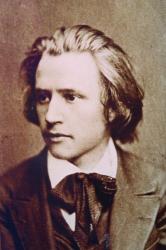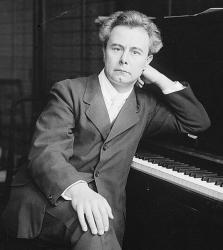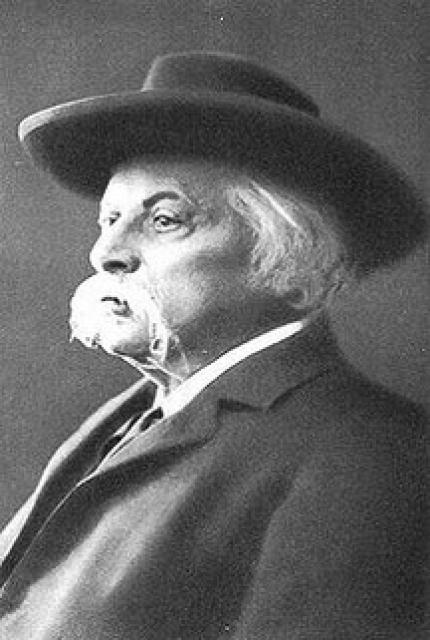
Karl Goldmark
 Austria
- Early Life and Education
- Vienna and Early Career
- Compositional Breakthroughs and Recognition
- Later Life and Legacy
Early Life and Education
Karl Goldmark was born on May 18, 1830, in Keszthely, Hungary, to a Jewish cantor's family. In 1834, his family relocated to Deutschkreutz in Burgenland (now Austria), where financial hardship marked their lives. At age 11, young Karl began violin lessons and later attended music school in Sopron.
Vienna and Early Career
At 14, Goldmark moved to Vienna, where he studied violin under Leopold Jansa for 18 months. Aspiring to enter the Vienna Conservatory, his plans were derailed by the revolutionary events of 1848 and financial constraints. From age 18, he established himself as a violinist, playing at the Carltheater in Vienna, where he also pursued piano studies. However, Goldmark remained self-taught as a composer.
Compositional Breakthroughs and Recognition
In 1858, Goldmark's own compositions began to be performed. In the early 1860s, he joined a string quartet, where he met Johannes Brahms, who became his close (albeit occasionally contentious) friend. With Brahms, Goldmark embarked on a journey to Italy and visited Baden and Klosterneuburg.
Goldmark's breakthrough came in 1865 with the premiere of his overture "Sakuntala." In 1871, his opera "The Queen of Sheba" premiered to critical acclaim, securing his reputation as a prominent composer of the era.
Later Life and Legacy
Goldmark continued to compose music, including other operas, symphonies, and chamber works. He taught at the Vienna Conservatory and numbered Jean Sibelius among his influential students. Goldmark's music was highly regarded, and he received honorary doctorates from the University of Budapest and the University of Vienna.
After his passing on January 2, 1915, Goldmark was laid to rest in Vienna's Old Jewish Cemetery. His legacy lives on through his compositions and the Goldmarkplatz in Vienna, named in his honor. In 1980, a museum dedicated to his life and work was opened in Deutschkreutz. His nephew, Rubin Goldmark, became a noted American composer and pianist.