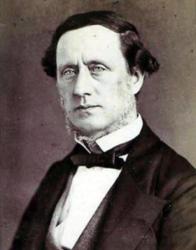
Hugo Wolf
 Austria
Biography of Hugo Wolf
Hugo Wolf was an Austrian composer and music critic of Slovenian descent. He was born on March 13, 1860, in Windischgrätz, Styria, Austria. From a young age, Wolf showed a talent for music and began studying piano and violin with his father. However, his volatile temperament and difficulty with subjects other than music led to his expulsion from several schools.
Despite these setbacks, Wolf was able to attend the Vienna Conservatory from 1875 to 1877. However, he was eventually expelled for disciplinary reasons, although he claimed to have left due to the conservative atmosphere. After leaving the conservatory, Wolf began giving music lessons in Vienna, using the support of patrons to sustain his composition.
During this time, Wolf had a three-year love affair with Valentina Frank, the daughter of one of his patrons. Their relationship inspired him to compose, and his songs from this period began to display his mature style. However, their relationship ended shortly before Wolf's 21st birthday, causing him to return to his parents' home, where he faced strained relationships with his family.
In 1881, Wolf took a brief position as second conductor in Salzburg, which only reinforced his father's belief that he was not cut out for a career in music. He lacked the temperament, conducting technique, and affinity for non-Wagnerian repertoire. After a year, Wolf returned to Vienna and continued giving music lessons.
Depression and Musical Achievements
Throughout his life, Wolf struggled with depression and mood swings. The death of Richard Wagner in February 1883 deeply affected him, as he felt lost without his idol's guidance. However, this period also marked the beginning of Wolf's recognition as a composer.
His songs caught the attention of Franz Liszt, who he greatly admired. While his music criticism in the newspaper "Wiener Salonblatt" earned him enemies, Wolf fervently supported Liszt, Schubert, and Chopin. Despite his reputation as the "Wild Wolf," his charisma and musical talent helped him maintain relationships with friends and patrons.
From 1888 to 1889, Wolf experienced a burst of creativity, composing song cycles based on the poetry of Eduard Mörike, Nikolaus Lenau, Johann Wolfgang von Goethe, and others. These cycles, along with his "Italian Serenade" for string quartet, showcased his mature instrumental style.
In the following years, Wolf struggled with declining physical and mental health, worsened by the effects of syphilis. He was unable to complete his opera "Der Corregidor" due to his deteriorating condition. In 1897, he suffered from syphilitic insanity and was admitted to a psychiatric hospital.
Despite his struggles, Wolf's compositions continued to be performed and gained popularity. His songs were recognized for their intense emotional expression and innovative approaches to musical structure. He was considered one of the greatest masters of the 19th-century art song genre, following in the footsteps of Beethoven, Schubert, and Schumann.
Legacy and Interesting Facts
Wolf's music was heavily influenced by Richard Wagner, whom he idolized. He had a strong aversion to Johannes Brahms, viewing his music as overly conservative. Wolf's compositions often showcased his interest in contemporary trends in music theater.
Interestingly, Wolf was related to the conductor Herbert von Karajan through his mother's side. His life and character were also used as inspiration for the protagonist in Thomas Mann's novel "Doctor Faustus."
Hugo Wolf appeared on an Austrian postage stamp in 1953. He was also portrayed by David Collings in the film "Mahler" (1974), directed by Ken Russell.