
Karl Joseph Wirth
 Germany
- Biography of Karl Josef Wirth
- Early Political Career
- World War I and Post-War Years
- Political Challenges and Emigration
- Later Years and Legacy
- Josef Wirth passed away on January 3, 1956, in Freiburg.
Biography of Karl Josef Wirth
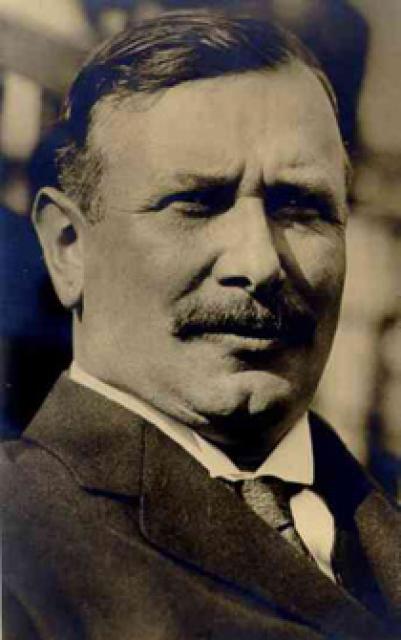
Karl Josef Wirth, the youngest Chancellor of Germany, was born on September 6, 1879, in Freiburg, Germany. Coming from a working-class family, Josef Wirth enrolled and received his education at the Albert Ludwig University, where he completed his studies in 1906 with a doctorate in mathematics.
Early Political Career
In 1908, Wirth became a professor at a gymnasium in his hometown of Freiburg. During this time, he joined the Catholic Center Party and became its representative in the government in 1912. In 1914, Wirth became a member of the Reichstag.
World War I and Post-War Years
During the outbreak of World War I, Wirth, deemed unfit for military service, joined the Red Cross and served as a medic on the Western Front until 1918. Wirth supported the November Revolution of 1918 and became Minister of Finance in the same year. Following Matthias Erzberger's resignation, German Chancellor Hermann Müller invited Wirth to succeed him as the Imperial Minister of Finance. After the resignation of the government led by Konstantin Fehrenbach due to the London Ultimatum, Josef Wirth rose to the position of Chancellor of Germany. He was only 41 years old when he assumed the Chancellorship.
Political Challenges and Emigration
In 1922, Wirth's government signed the Soviet-German Treaty of Rapallo. On June 24, 1922, after the assassination of Walter Rathenau by right-wing extremists, Wirth declared, "There stands an enemy who drips poison into the wounds of the people. There stands an enemy, and there is no doubt that this enemy stands on the right!" His words proved prophetic as the leaders of the Nazi Party and other right-wing groups claimed he was part of a "Judeo-Communist conspiracy."
In 1933, Josef Wirth was forced to emigrate to neutral Switzerland. He returned to his homeland in 1948. Five years later, he founded and became the leader of the "Union of Germans" party in West Germany. The party advocated for unity, peace, and freedom, opposing militarism and advocating for friendly relations with the Soviet Union.
Later Years and Legacy
In 1952, Wirth became a member of the World Peace Council. In 1955, he was awarded the International Stalin Peace Prize for "strengthening peace between nations." British politician Robert Boothby described him as someone who could only be simultaneously a German and a Jew: a prophet, philosopher, mystic, author, statesman, industrial magnate of the highest order, and a pioneer of what became known as "industrial modernization."


