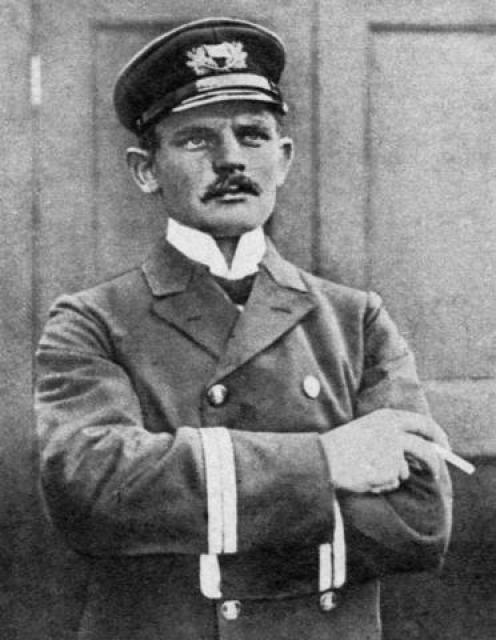
Karl Lodi
 Germany
- Karl Hans Lody: A German Spy in Britain
- Recruiting as a Spy
- Operations in Scotland
- Telegraphic Communication
- Post-Attack Intelligence Gathering
- Near Capture and Relocation
- London Intelligence and Further Missions
- Naval Defenses and Irish Intelligence
- Identification and Arrest
- Trial and Execution
- Sentencing and Aftermath
Karl Hans Lody: A German Spy in Britain
Early Life and Naval CareerKarl Hans Lody was born in 1877 into a Prussian officer's family. Despite his father's military rank, the allure of the sea drew Lody from a young age. Defying his family's expectations, he ran away from home and secured a position as a cabin boy on a merchant ship. After several years at sea, he attended a naval academy and served as a volunteer in the Imperial German Navy.
Recruiting as a Spy
In 1914, upon the outbreak of World War I, Lody traveled to Berlin and approached the Admiralty Headquarters, offering his services as a spy in Great Britain. His fluency in English and possession of forged American citizenship documents eased his entry into the country. Recognizing the value of his skills, the German Navy assigned him to gather intelligence on British naval operations.
Operations in Scotland
Rosyth Naval Base SurveillanceLody's initial mission involved gathering information on the Royal Navy's base at Rosyth near Edinburgh. Posing as an American, he conducted regular observations at the port and engaged in conversations with naval officers to glean valuable insights. Through these efforts, he gained access to details about British warships stationed at the base.
Telegraphic Communication
Using the pseudonym "Charles," Lody sent coded telegrams to Stockholm, relaying details of British naval activity. These messages proved crucial for the German Navy, as they revealed a significant concentration of warships in the area. Consequently, submarines U-21 and U-22 were dispatched to attack British ships in the Firth of Forth. On September 5, 1914, the U-20 sank the British cruiser HMS Pathfinder in a devastating blow.
Post-Attack Intelligence Gathering
Following the sinking of the Pathfinder, Lody continued his surveillance, renting a bicycle to improve his mobility around the Rosyth base. However, his subsequent reports were met with some setbacks. One letter, written in German without encryption, was intercepted by British authorities and raised suspicions.
Near Capture and Relocation
As Lody's activities drew unwanted attention, he noticed men following him during his bicycle rides. Undeterred, he confronted the police and lodged a complaint as an American citizen. Their apologetic response appeared to allay his concerns, but soon after, Lody realized the situation was more precarious than he had thought. An encounter with an acquaintance who knew his true identity forced him to relocate to London.
London Intelligence and Further Missions
Government Protection MeasuresIn the capital, Lody gathered intelligence on air defense preparations for government buildings against Zeppelin raids. His report on these measures was successfully transmitted to Berlin.
Naval Defenses and Irish Intelligence
Subsequent reports from Lody provided detailed descriptions of the defensive fortifications in the Firth of Forth, the River Tyne, and other British naval ports. He also assessed the armament of British ships in the North Sea. Expanding his operations, Lody traveled to Ireland, seeking information on naval bases in Dublin and Belfast.
Identification and Arrest
On October 28, 1914, Lody ventured to the west coast of England, where he witnessed the conversion of ocean liners into armed auxiliary cruisers and troop transports. His final report, composed in Dublin, expressed concerns about his potential arrest. While en route to Dublin, his message was intercepted by British counterintelligence.
On October 30, 1914, Lody was arrested in a hotel restaurant. A search of his room yielded incriminating evidence, including gold coins, a notebook containing the text of his first telegram, addresses of individuals in Berlin, Hamburg, and Bergen, and drafts of his reports.
Trial and Execution
Espionage ChargesLody was charged with espionage and denied the accusations, claiming he was carrying out his military duty. The trial, scheduled for October 31, 1914, attracted widespread attention and drew eminent legal counsel.
Sentencing and Aftermath
Despite his defense, the court found Lody guilty of "specially dangerous war crime" and sentenced him to death. He was executed by firing squad the following day, November 2, 1914. Lody's actions demonstrated the vulnerability of national security during wartime and the risks taken by those who undertake espionage missions.


