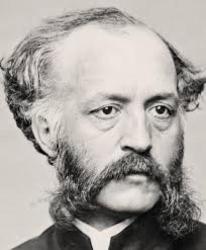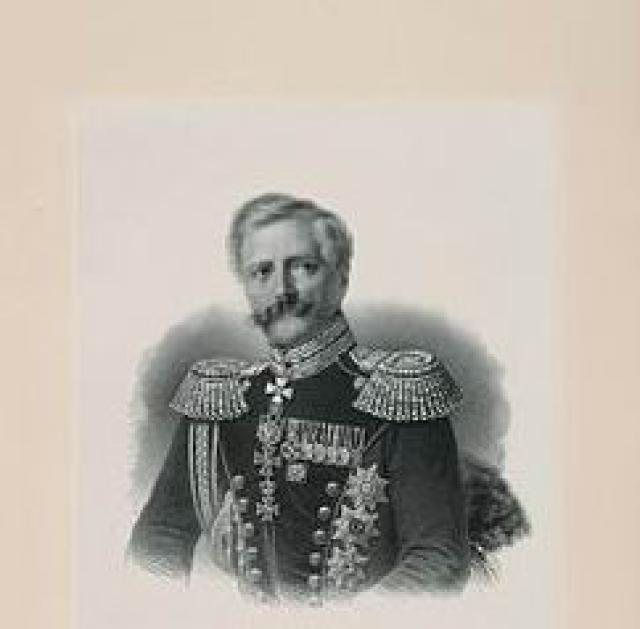
Karl Shilder
 Russia
- An Ingenious Military Engineer: Karl Antonovich Schilder
- Military Career and Fortifications
- Inventions and Innovations
- The First Russian Submarine
- Later Career and Death
An Ingenious Military Engineer: Karl Antonovich Schilder
Early Life and EducationKarl Antonovich Schilder, a renowned Russian military engineer, was born on December 27, 1785 (January 7, 1786, New Style) in the village of Simanovo, now part of the Nevelsky District in the Pskov region. He received his secondary education at the Moscow Noble University Boarding School.
Military Career and Fortifications
In 1803, Schilder joined the army as a column leader in the Imperial Russian Guard. He saw combat in the Battle of Austerlitz in 1805 and subsequently entered the engineering corps. Throughout his life, he served in various engineering units, rising to the rank of Adjutant General. Schilder's main focus was fortification, but his vast contributions extended far beyond this field.
Inventions and Innovations
Schilder's brilliance was evident in his diverse inventions and ideas, spanning rocketry, mining, bridge construction, underground tunneling, submarine mines, and a submersible for fortress defense. He played a pivotal role in developing electronic ignition for gunpowder, which he applied to detonate underwater mines using galvanic current. His pioneering work in underwater warfare also led to the creation of the "Committee on Underwater Experiments" in 1839, which became a hub for research on submarines.
The First Russian Submarine
In 1834, Schilder designed and built the first Russian submarine. The vessel featured a streamlined, all-metal hull and a cylindrical shape with two projecting towers. It was equipped with oars for propulsion, a vertical rudder for steering, and a ventilation system. While the boat lacked combat capabilities, it demonstrated the feasibility of underwater navigation and paved the way for future developments.
Later Career and Death
Despite his groundbreaking innovations, Schilder's submarine did not gain widespread acceptance or support for further development. As the Crimean War erupted in 1853, Schilder returned to active duty as a military engineer. While crossing the Danube River in 1854, he sustained severe wounds and died on June 11 (23), 1854, in a hospital in Călărași, Romania.
Schilder's legacy as an inventive genius and pioneer in military engineering continues to inspire generations of engineers and scientists. His unwavering dedication to innovation and his groundbreaking work have left an indomitable mark on the annals of defense technology.