Karl Theodor Weigel
 Germany
- Early Life and Career
- Nazi Party and SS
- Research and Scholarship
- Ahnenerbe
- Post-War Interrogation and Internment
Early Life and Career
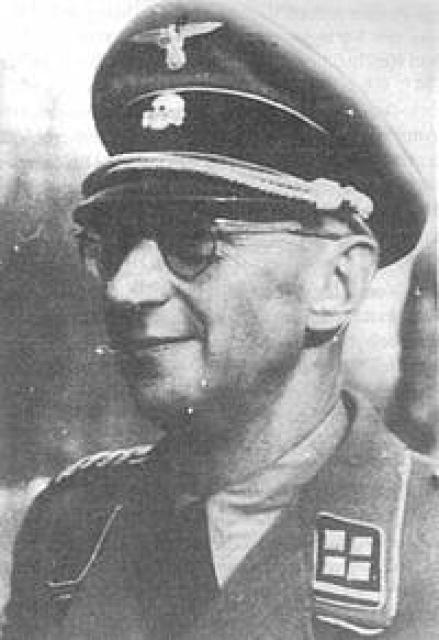
Otto Weigel, a German historian and runeologist, was born on March 23, 1901, in Magdeburg, the son of a medical official. He initially pursued architecture at the construction school in Suhl but later became involved in the "Wandervogel" youth movement. In 1915, he volunteered for military service in World War I.
Nazi Party and SS
After the war, Weigel joined the Freikorps and the Stahlhelm. He then trained as a bookseller in Hartenstein and opened his own publishing house and bookstore in Bad Harzburg in 1921. In 1931, he became a member of the Nazi Party (NSDAP) and in 1936, the SS.
Research and Scholarship
In 1934-1936, Weigel headed the press office of the Nazi district of South Hanover-Brunswick. In 1936, he took over the head of the symbol research department of the German Research Society. Despite lacking formal education in the field, he dedicated significant time to studying the house marks of half-timbered buildings.
Ahnenerbe
In 1937, Weigel joined the Ahnenerbe, an SS research organization dedicated to the study of German heritage. He initially led the symbol research division within the Ahnenerbe's Institute for Scribes and Symbols. Later, he became director of the institute. His work focused primarily on German symbolism, house marks, and runeology, which he presented as a resistance to Christianity and a remnant of ancient Germanic pagan culture.
Post-War Interrogation and Internment
After the war, Weigel faced interrogation and internment by Allied forces from 1945 to 1947. He was subsequently released but did not publish any further works.