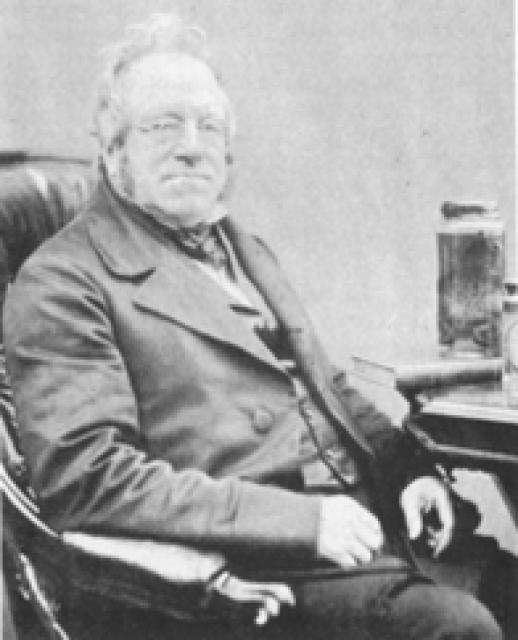
John Edward Gray
 Great Britain
- John Edward Gray: A Visionary Zoologist and Philatelist
- Curator of the British Museum
- Legacy in Zoology
- Passion for Philately
- Hand Catalogue of Postage Stamps
- Legacy in Philately
John Edward Gray: A Visionary Zoologist and Philatelist
Early Life and CareerJohn Edward Gray began his career as a botanist, assisting his father in the compilation of "The Natural Arrangement of British Plants" (1821). However, his interest in botany waned after failing to secure a fellowship in the Linnean Society of London. Subsequently, he turned his attention to zoology.
Curator of the British Museum
In 1824, Gray joined the Zoological Department of the British Museum, working under John George Children. In 1840, he succeeded Children as the department's curator. During his tenure, which lasted until Christmas 1874, Gray published numerous catalogues of the museum's collection, providing detailed accounts of animal groups and descriptions of new species. He also significantly expanded and improved the zoological collection, making it one of the finest in the world.
Legacy in Zoology
Gray's contributions to zoology extended beyond his curatorial role. The Indian Yellow bittern (Ardeola grayii) is named in his honor. He is also credited with proposing the transformation of the British internal postal service.
Passion for Philately
Gray had a keen interest in postage stamps, claiming to be the world's first philatelist. He began collecting stamps before their official inception, including revenue and embossed stamps. On May 6, 1840, the day the first postage stamps were issued, Gray purchased a block of four in Great Britain, initiating his lifelong stamp collection.
Hand Catalogue of Postage Stamps
In 1861, Gray published the "Hand Catalogue of Postage Stamps," the precursor to modern stamp catalogues. While he is not universally recognized as the sole inventor of the stamp catalogue, his publication played a significant role in its development. An illustrated and improved version by Alfred Potiquet later became widely available.
Legacy in Philately
Gray's contributions to philately earned him recognition as one of the "Fathers of Philately" in the "Roll of Distinguished Philatelists."


