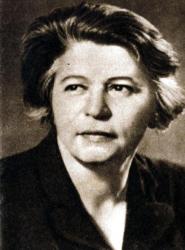
Karlos Menem
 Argentina
- Biography of Carlos Menem
- Political Activism
- Governor of La Rioja
- Presidential Candidacy and Economic Reforms
- Challenges and Reforms
- Legacy
Biography of Carlos Menem
Carlos Menem, the former President of Argentina, was born on July 2, 1930 in Anillaco, La Rioja Province. He was the son of a Syrian immigrant and went on to graduate from the National University of Cordoba as a lawyer.
Political Activism
As a lawyer, Menem defended activists of a political movement who were imprisoned after the military coup in 1955. He became a prominent political figure in La Rioja and ran as a candidate for the Peronists in the national senate elections in 1958.
Governor of La Rioja
After Juan Peron's return from exile, Menem won the elections and became the governor of La Rioja in 1973. However, he was later imprisoned from 1976 to 1981 after a military coup overthrew the government of Peron's widow, Maria Estela Martinez de Peron.
Presidential Candidacy and Economic Reforms
In 1983, Menem was re-elected as the governor of La Rioja and in 1988, he was nominated as a presidential candidate by the Peronist party. With widespread support from the Peronist movement, Menem won the elections in May 1989, defeating the candidate backed by the "Civic Radical Union" party.
As President, Menem implemented economic reforms including privatization, price liberalization, and attracting foreign investments. He focused on economic integration with the United States and the South American Common Market (MERCOSUR), which was established in 1991 with Brazil, Uruguay, and Paraguay.
Challenges and Reforms
Menem's presidency faced challenges, including a financial crisis in Mexico in 1994-1995 that affected Argentina's economy, leading to an economic crisis, poverty, and unemployment. However, his "Menemism" – a combination of populism and neoliberalism with a focus on market principles – remained resilient.
In 1996, Menem sought extraordinary powers from Congress to accelerate reform processes, which were granted. His government raised taxes, accelerated privatization of state-owned enterprises, and reduced the number of public servants. The ruling party, however, faced accusations of corruption and rising unemployment, resulting in a loss of majority in the lower house of Congress in 1997.
Despite the challenges, Menem's presidency was marked by economic growth, with an average annual production growth of 7% from 1991 to 1994. He also focused on regaining civilian control over the military and reducing defense expenditure.
Legacy
Carlos Menem's presidency left a lasting impact on Argentina, characterized by his economic reforms and efforts towards political and economic integration. While his tenure faced criticism for the concentration of power and neglecting social issues, his policies played a significant role in shaping the country's economic landscape.