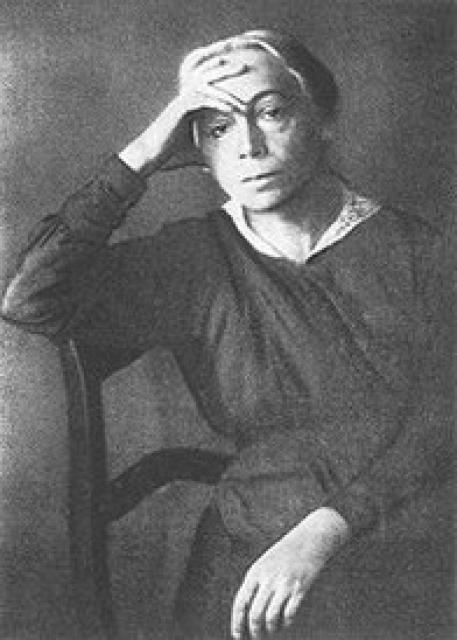
Kathe Kollwitz
 Germany
- Käthe Kollwitz: A Life Dedicated to Art and Social Justice
- Artistic Breakthrough: "The Weavers"
- Commitment to Social Justice
- Artistic Recognition
- Personal Tragedy and Triumph
- Censorship and Resistance
- Final Years and Legacy
Käthe Kollwitz: A Life Dedicated to Art and Social Justice
Early Life and EducationKäthe Kollwitz was born on July 8, 1867, in Königsberg, Germany. From 1885 to 1890, she studied under Karl Stauffer-Bern in Berlin and Ludwig Herterich in Munich, honing her skills in painting, graphics, and sculpting.
Artistic Breakthrough: "The Weavers"
In 1891, Kollwitz married the doctor Karl Kollwitz and settled in northern Berlin. In 1892, their son Hans was born. That same year, Kollwitz attended the premiere of Gerhart Hauptmann's play "The Weavers," which became the catalyst for her groundbreaking graphic series "The Weavers' Revolt" (1895-1898).
Commitment to Social Justice
Kollwitz's art consistently reflected her profound concern for social injustice. Her series "The Peasant War" (1902-1908) and "War" (1922-1925) poignantly depicted the suffering and struggles of working-class people in the face of war and poverty.
Artistic Recognition
In 1904, Kollwitz resided in Paris, where she further refined her artistic style. In 1907, she received the Villa Romana Prize and spent time in Florence, Italy. In 1919, she became a professor at the Berlin Academy of Arts.
Personal Tragedy and Triumph
In 1914, Kollwitz's son Peter was killed in World War I. This profound loss deeply affected her art and led to the creation of some of her most powerful works, such as "Death" (1934-1935).
Censorship and Resistance
Under the Nazi regime in 1933, Kollwitz was forced to resign from the Academy of Arts due to her political views. Her work was banned from being exhibited, but she continued to create powerful lithographs that protested war and oppression.
Final Years and Legacy
Kollwitz spent her final years in exile in Morizburg, near Dresden. She passed away on April 22, 1945, just a few months before the end of World War II. Her art remains a testament to her unwavering commitment to social justice and human suffering. Käthe Kollwitz is widely recognized as one of the most influential artists of the 20th century, whose work continues to resonate with audiences worldwide.