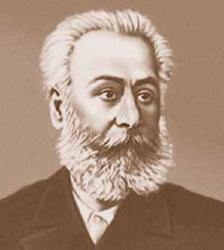
Keizo Hino
 Japan
Japan- Hiroshi Hino: A Japanese Surrealist with Literary Accolades
- Literary Debut and Journalism Career
- Surrealist Turn and Literary Success
- Dreams and the Influence of Jung
- Health Struggles and Literary Response
Hiroshi Hino: A Japanese Surrealist with Literary Accolades
Early Life and InfluencesHiroshi Hino, a prominent Japanese surrealist writer, was born in Tokyo. While his youth was spent in Seoul, Korea, where his father was stationed, he later returned to his ancestral home in Fukuyama upon the end of the war. Hino's early literary interests were sparked by the works of postwar authors, particularly the Noma, Shiina, and Hanya group, during his time at Tokyo University.
Literary Debut and Journalism Career
Following his graduation from university in 1952, Hino embarked on a career as a journalist for the international department of the "Yomiuri" newspaper. As a special correspondent, he witnessed firsthand the horrors of war in Vietnam and Korea. During this period, he formed a close bond with Takeshi Kaiko, another correspondent who covered these conflicts. In 1966, Hino published a collection of war reports titled "Vietnamese Reportage."
Surrealist Turn and Literary Success
Hino's literary debut came with the story "On the Other Side" (1966). His breakthrough, however, occurred with the publication of "Gone Forever" (1970) in the magazine "Bungakukai," which earned him a nomination for the Akutagawa Prize. For his novel "House in the Cycle of Samsara" (1974), inspired by his wartime experiences and his relationship with his Korean wife, Hino received the Hirabayashi Prize. While critics initially interpreted the work as a conventional family drama, Hino's ambitions lay in transcending its mundane aspects.
In the 1970s, Hino gained wide recognition for his novel "At the Sunset" (1975), which won the Akutagawa Prize. The early 1980s marked a significant shift in his writing when he embraced surrealist narratives, evident in works such as "Embraces" (1982), "Island in Dream" (1985), and "The Floating Dune" (1986). Hino used the metaphor of sand to express the atomized existence of modern individuals in an increasingly urbanized and individualized society.
Dreams and the Influence of Jung
Hino devoted himself to exploring the theme of dreams in the late 1980s, as seen in his novel "Island in Dream" (1985), the short story collection "Running Through Dreams" (1985), and other works. He believed dreams played a crucial role in guiding him towards important decisions and saw them as a way to resist the destructive path humanity was on. Carl Jung's theories had a profound influence on Hino, and his autobiography became a constant companion from the late 1960s onward.
Health Struggles and Literary Response
A diagnosis of cancer brought about a new turn in Hino's writing. "Epicenter of the Typhoon" (1993) and "Light" drew upon his experiences with the illness, as did numerous short stories, including "Shadows on the Roof" (1991). He continued working at the "Yomiuri" newspaper until the end of his life in 2002 from colon cancer. The poet Makoto Ooka assumed the task of organizing Hino's funeral.