Keke Rosberg
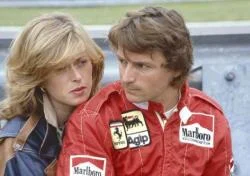
Keke Rosberg became Formula One world champion in one of the sport’s most unpredictable seasons. Fast, forceful, and famously outspoken, he won the 1982 title for Williams with just one Grand Prix victory, outlasting rivals in a year marked by accidents, changing fortunes, and mechanical failures. He later built a career in sports cars and team management, and watched his son Nico follow him to a Formula One championship in 2016.
From Nordic racing to Formula One
Born Keijo Erik Rosberg on 6 December 1948 in Solna, Sweden, he grew up in Finland and raced under the Finnish flag. He advanced through European junior categories before entering Formula One in 1978. His early seasons were spent with smaller teams, including Theodore, ATS, Wolf, and Fittipaldi. The cars were rarely capable of regular wins, but Rosberg developed a reputation for speed, determination, and a willingness to make the most of limited machinery.
His breakthrough came at the end of 1981, when Williams needed a driver for the following season. The team had won the constructors’ championship, but its reigning champion Alan Jones had announced his retirement. Rosberg took the opportunity and joined a leading team at a moment when the sport’s competitive balance was in flux.
The 1982 championship
The 1982 Formula One season was exceptionally turbulent. Several leading drivers won races, but none dominated the points standings. Rosberg scored consistently and claimed the Swiss Grand Prix at Dijon-Prenois, the only race he won that year. His steady results proved more valuable than a long list of victories: he secured enough points to become world champion while Williams finished outside the top three in the constructors’ standings.
The championship made Rosberg the first Finnish driver to win Formula One’s drivers’ title. It also defined his public image as an opportunistic racer in the best sense of the word: alert to openings, able to adapt, and unwilling to concede a result before the finish. His triumph showed that a season could be won through consistency and nerve even when a driver’s car was not the fastest at every circuit.
He won again at Monaco in 1983, and his pace remained clear as Formula One moved rapidly into the turbo era. In 1985, driving for Williams-Honda, he took pole position for the British Grand Prix at Silverstone with a lap that averaged more than 160 miles per hour. The astonishing speed was then a record for a Formula One qualifying lap, and it remains one of the sport’s most celebrated single-lap performances.
Later racing and retirement
Rosberg joined McLaren for the 1986 season, where he partnered Alain Prost. The year was difficult: reliability problems and the team’s changing competitive position kept him from winning, and Prost took the championship. Rosberg retired from Formula One at the end of the season. Across his career he recorded five Grand Prix victories, five pole positions, and 17 podium finishes.
Retirement from Formula One did not end his involvement in racing. He competed in sports cars, including with Peugeot, and later raced in Germany’s touring-car championship. He also moved into management and team ownership, guiding younger drivers and helping build careers beyond the cockpit.
Family and legacy
Rosberg’s son Nico was born in Germany and went on to race in Formula One for Williams and Mercedes. Keke helped guide his early career, and in 2016 Nico won the world championship, 34 years after his father’s title. The Rosbergs became only the second father-and-son pair to win Formula One drivers’ championships, after Graham and Damon Hill.
Keke Rosberg is remembered for a title won through consistency in a season when many of the favorites faltered, but his reputation rests on more than the championship. His willingness to attack, his blunt personality, and his ability to extract speed from difficult cars made him a memorable figure in Formula One’s turbo-era transition. His success also opened the way for Finland’s later generation of champion drivers.