
Khyng Maza
 Philippines
- A Filipino boy with hydrocephalus
- A desperate situation
- A helping hand
- A difficult journey
- Long-term complications of hydrocephalus
A Filipino boy with hydrocephalus
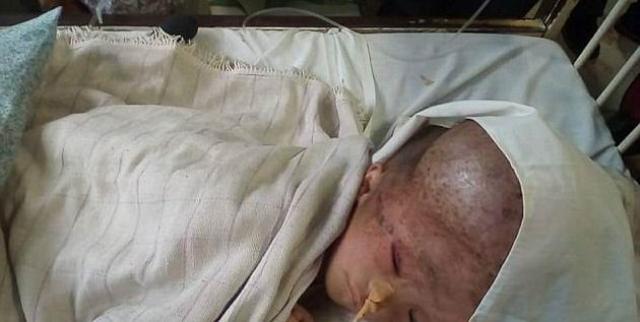
Four-year-old Hing Isaiah Maza, a Filipino boy suffering from hydrocephalus, is finally preparing for a life-saving brain surgery. Help came to the boy with an extremely swollen head from a "good Samaritan" who raised funds for his treatment. Hing's condition, if left untreated, can lead to irreversible brain damage, vision problems, mobility issues, learning difficulties, and even death. Unfortunately, his father abandoned the family, refusing to be involved in the fate of Hing and his siblings. Hing's mother, Raisa, took her son to a doctor, and it became evident that their poor family could not afford the expensive medicines and surgery needed to stop Hing's head from swelling. However, a kind-hearted woman noticed Hing, who lives in a house in Pangasinan, Philippines, and began to raise funds for his treatment.

A desperate situation
Hing, who has an older sister and a younger brother, has suffered from hydrocephalus since birth. However, his family had to keep him at home because they couldn't afford medical care. His father abandoned them, and Raisa, who sells grilled chicken on the roadside, barely earns enough to feed her children. Raisa admits that doctors refused to help her son due to lack of funds. She said, "Doctors didn't help us, and in September last year, Hing's head became even more swollen." Death was creeping closer to Hing until a woman named Louisa Carmona accidentally saw him while passing through their small village in the fall of 2016.

A helping hand
Carmona took the boy to doctors, but they still refused to help, citing a lack of funding. A year later, Carmona visited Hing again and started raising funds to have the little patient evaluated at the National Children's Hospital in Quezon City, where they could assess his condition. A CT scan revealed that the chances of surgery were slim, but not impossible. The procedure will take place in January or February, when Hing is stronger and his bedsores have healed. They are considering using a shunt implantation to drain fluid through a tube as a treatment option. Another alternative method is an endoscopic third ventriculostomy (ETV), which involves creating a hole in the membrane to drain excess fluid.
A difficult journey
Carmona says, "The boy was diagnosed with hydrocephalus when he was three years old. The doctors didn't make a conclusion, but Hing definitely needs surgery." Hing's grandmother, Felicidad, also takes care of him. Like her daughter, she remembers the times when they were turned away from everywhere due to lack of money for his treatment. Carmona adds, "Hing spent his entire life within four walls because his family couldn't afford to send him to the hospital for a check-up." She concludes, "It's a sad story, but now we're praying for Hing to survive and gradually recover."

Long-term complications of hydrocephalus
Hydrocephalus can lead to long-term complications, including learning disabilities, speech disorders, memory problems, attention deficit, organizational difficulties, vision problems such as strabismus and decreased visual acuity, coordination problems, and epilepsy. Hydrocephalus that manifests at birth is believed to be the result of a brain defect that restricts the flow of cerebrospinal fluid. In adults and children, hydrocephalus is often caused by a disease or injury that affects the brain. Endoscopic third ventriculostomy can sometimes be used as an alternative to shunt surgery. This modern minimally invasive method helps avoid the infectious complications that may arise with shunting.