Kirill Kuznetsov
- Early Life and Political Activism
- Relocation and Further Political Engagements
- Involvement in the October Revolution
- Post-Revolution and Later Career
- Death and Legacy
Early Life and Political Activism
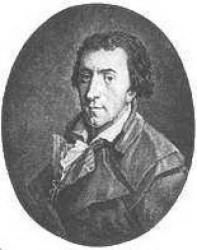
In 1886, Boris Kuznetzov was born into a prominent family in Krasnoyarsk, Siberia. His father held the rank of collegiate counselor, reflecting the family's status. By 1905, at the tender age of 19, Kuznetzov joined the Socialist Revolutionary Party (SRs), also known as the "Esers."
As an active member of the SRs, Kuznetzov played a significant role in the local branch's operations, even serving as part of its provincial committee. In 1906, he was involved in the failed assassination attempt on General Rennenkampf, an event that marked a critical juncture in his involvement with the party.
Relocation and Further Political Engagements
In 1907, Kuznetzov relocated to St. Petersburg, Russia's bustling capital. There, he enrolled in an institute to pursue his studies. In 1915, the outbreak of the First World War led to Kuznetzov's mobilization into the active army, where he served with distinction.
Kuznetzov married twice. His first wife was Rozalya Antonovna Rosenberg, and his second wife was Alexandra Mikhailovna Ushakova. His second marriage resulted in the birth of a daughter.
Involvement in the October Revolution
When the October Revolution erupted in 1917, Kuznetzov emerged as a pivotal figure in the so-called "Committee for Salvation," an anti-Bolshevik coalition in St. Petersburg. The committee's clandestine activities and efforts to challenge the Bolshevik regime were chronicled in John Reed's renowned book, "Ten Days That Shook the World."
Post-Revolution and Later Career
After the Bolshevik victory, Kuznetzov successfully concealed his involvement in the anti-Bolshevik activities. He relocated to Vyborg, then to Helsinki, where he continued his military service. With the outbreak of the Finnish Civil War, he transferred to the Ural and Western Fronts, respectively.
In 1920, Kuznetzov returned to Leningrad, where he accepted a teaching position at military courses. In 1923, he was demobilized from the army. Through the intercession of his childhood friend, Nikolai Borisovich Eismont, a prominent Bolshevik Party leader, Kuznetzov became a member of the All-Union Communist Party (Bolsheviks).
Death and Legacy
Boris Kuznetzov passed away in Leningrad in 1932. His remains were interred in the city's Bogoslovskoye Cemetery. Despite his early involvement in the anti-Bolshevik movement, Kuznetzov's later career as a loyal member of the Communist Party speaks to the complexities of Russian political life during the tumultuous period of the early 20th century.