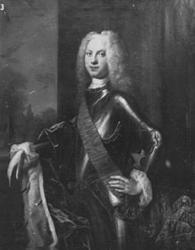
Otton 1
 Germany
Biography of Otto I
Otto I, a German king and Holy Roman Emperor, was born into the Saxon dynasty. He became king in 936 and emperor in 962. He faced challenges from separatist tribal dukes in Swabia, Bavaria, and Lotharingia. To strengthen his royal authority, he relied on bishops and abbots, granting them wide privileges known as "Ottonian privileges." He also appointed his relatives as rulers of individual parts of duchies. These actions laid the foundation for the significant consolidation of royal power in Germany in the 10th and early 11th centuries.
Early Life and Reign:
Otto I became king at the age of 24 when he ascended the throne of the East Frankish Kingdom, as Germany was then officially called. He was named after his grandfather, who lived to see his birth in 912. At the age of sixteen, in 929, Otto married Edith, the daughter of the Anglo-Saxon king Edward. This marriage was intended to maintain ties with his countrymen who had settled overseas. Otto, who initially did not know how to read, learned to do so after his wife's death. He was described as highly capable in reading and understanding texts. He was also able to communicate in Slavic and Romance languages.
Portrait and Coronation:
Otto resembled his father in appearance and inherited his inclinations and qualities. He was an avid hunter and sociable, but his aspirations were more noble. He considered himself "born of the purple" and took his royal calling deeply and seriously. It is said that he fasted before public appearances wearing the crown. The assembly of princes, where his election was to receive final approval, was held in Aachen, on Frankish territory. The grandeur of this election demonstrated the extent to which royal authority had been established. Dukes, nobles, and a multitude of people were present at the election. After the secular nobility elected and enthroned him, Archbishop of Mainz presented him to the crowd gathered in the cathedral as the "chosen by God, once appointed by mighty Lord Henry, now reigning over all the princes, King Otto..." The archbishops of Mainz and Cologne then performed the coronation, followed by an anointing ceremony. During the coronation feast, the dukes served the king at the table, and the highest court officials held important positions at the celebration, which they tried to make as significant as possible.
Challenges and Victories:
The early years of Otto's reign went smoothly. Invasions by Slavs and Hungarians, who sought to take advantage of the change in leadership, were successfully repelled. The Hungarians did not even reach the borders of Saxony. However, soon challenges arose. The ancient tribal envy between the Frankish and Saxon nobility became a cause for turmoil in the following years. Many Saxon vassals refused to serve their Frankish lords, believing that the current king was chosen from the Saxon tribe. Meanwhile, while Otto was occupied with pacifying Bavaria, where he replaced the rebellious Duke Eberhard with his uncle Berthold, another Eberhard, the Duke of Franconia, decided to suppress one of his rebellious Saxon vassals and ordered his city to be burned down. The king punished Eberhard for this unauthorized act, imposing a fine of 100 pounds of silver. The leaders of the duke's troops who carried out the order to burn the city were sentenced to a humiliating punishment, which their lord found offensive: each had to carry a dog on their hands to Magdeburg, the king's residence.
Rebellions and Reconciliation:
Provoked by this incident, Eberhard soon found an ally in the person of Tankmar, Otto's older half-brother from an unrecognized church marriage. Eberhard rebelled while Otto was dealing with the affairs in Bavaria. While Otto tried to pacify the rebels with gentle measures, Tankmar captured Otto's brother Henry and sent him to his ally Eberhard "as a simple slave." However, Tankmar's rebellion did not last long. While he was hiding in Eresburg, the king's warriors, with the help of the townspeople, stormed the city and killed Tankmar in a desperate struggle inside the church. After this, Eberhard hypocritically sought reconciliation with the king while preparing for another betrayal. He managed to meet and clash with his captive Henry, Otto's brother, and even convinced him that he had a better claim to the royal crown because Otto was born when his father was still a duke, while Henry was born after his father was already chosen as king. Thus, a large coalition was formed against the king, with two conspirators being joined by the restless Duke of Lotharingia, Giselbert, and even the West Frankish king.
Critical Year and Victory:
The year 939 was particularly critical for Otto, especially as the Danes and Slavs took advantage of the situation to launch attacks. He had to fight both in Saxony and Lotharingia and along the Rhine. However, Otto successfully dealt with these challenges. The course of his struggle with his enemies is difficult to trace due to the inaccuracy of the chronicles of that time. It is known that the struggle lasted quite a long time until one day Otto unexpectedly got rid of his main enemies. Near Andernach, the royal army caught up with the enemy's rearguard, which included Eberhard and Giselbert, while the majority of their troops had already crossed the Rhine with rich spoils. During the surprise attack, Eberhard fell after putting up a desperate resistance, and Giselbert, along with other fugitives, tried to escape in a boat to cross the river. However, the boat, overloaded with people, sank, and Giselbert drowned. In one day, in 939, two duchies were left without dukes. However, Henry did not abandon his ambitious plans. To fulfill them, he even resorted to murder and sent assassins to his brother, who was ready to hand over the Duchy of Lotharingia to him. But the plot was uncovered, the conspirators were captured and executed, and Henry fled in 941. Despite all this, the brothers reconciled in the same year. Henry sincerely repented, and Otto pardoned him. The brothers' relationship remained steadfastly loyal thereafter.
Later Years and Legacy:
After the intense struggle for his crown, Otto had a few years of calm. An important step was his decision not to restore the Duchy of Franconia but to incorporate the region into his personal rule. In 944, he handed over the Duchy of Lotharingia to Conrad, a Frankish nobleman to whom he later gave his daughter Liutgard in marriage. In 946, to Otto's delight, the West Frankish king Louis, who had been an ally of the rebellious dukes, had to seek Otto's help against his powerful vassals. Otto led a large army of up to 32,000 men to Gaul and reached Rouen, but he was unable to support the declining power of the Carolingians. At the same time, fierce fighting took place in the Slavic marches. Markgraf Gero fought from the Saale and middle Elbe to the Oder, while Markgraf Hermann Billung fought the Slavs from Kiel Bay to the mouth of the Oder. The struggle was accompanied by deceit and ruthless revenge. One example is when Markgraf Gero invited thirty elders from the Wends to a feast and drank with them. When they became intoxicated, he ordered them to be killed. Under such conditions, Christianity could only penetrate these regions with difficulty, but it was the only way to consolidate the conquests on the periphery.
Missionary Activities:
Nevertheless, Otto took advantage of this opportunity to focus on missionary activities and actively promote them. Church institutions were established at the boundaries of Slavic lands. In 946, the Havelsberg Bishopric was founded, followed by the Brandenburg Bishopric in 949. The first bishops of these places were consecrated by the Archbishop of Mainz. In the north, missionary activity was revived under the new Archbishop of Hamburg, Adaldag. In 948, three bishops were sent from Hamburg to three newly established bishoprics on Danish soil - Schleswig, Ribe, and Aarhus. Their consecration took place at the local council in Ingelheim, where important church matters were discussed, which Otto was particularly concerned about after the death of his wife in 946.
Intellectual Revival and Legacy:
During the mid-10th century, there was a significant intellectual revival in the German monastic and clergy circles, in both old and new monastic school such as St. Gallen, Reichenau, Fulda, Würzburg, Corvey, Gandersheim, and Quedlinburg. This revival promised to bear rich fruits in the future. The German state, firmly united after all the turbulence, had the invaluable advantage that its population, despite their individual and local differences, spoke the same language, which served as a unifying factor that Spain, Gaul, and Italy lacked. What Widukind of Corvey said about Otto's father, calling him "the greatest of European kings who created a vast and powerful state through his own efforts," can rightly be applied to Otto I, his son.
Source: Eger, O. World History in 4 volumes; AST Publishing, Moscow, 2000.