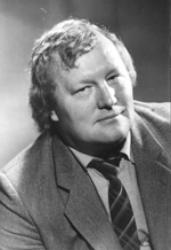
Kostas Korsakas
 Lithuania
Biography of Kostas Korsakas
Kostas Korsakas was a Soviet poet, critic, literary scholar, and public figure. He was born in Lithuania and completed his education at a gymnasium in 1928. However, due to his involvement in underground publications, he was sentenced to four years in prison and spent 1928-1930 in confinement. He was later pardoned by President Antanas Smetona, thanks to a petition signed by his friends.
In 1931-1936, Korsakas attended literary courses at Vytautas Magnus University in Kaunas as a free listener. He served as the director of the State Publishing House from 1940 to 1941. During the Great Patriotic War, he led the bureau of Lithuanian-Soviet writers in Moscow. From 1944 to 1945, he served as the chairman of the Union of Writers in Lithuania.
Korsakas became a professor of Lithuanian literature at Vilnius University in 1944 and also served as the dean of the Faculty of History and Philology from 1944 to 1956. In addition, he became the director of the Institute of Lithuanian Language and Literature of the Lithuanian SSR Academy of Sciences in 1946, which is now two separate institutions: the Institute of Lithuanian Literature and Folklore and the Institute of Lithuanian Language.
He was a deputy from 1947 to 1963 and the deputy chairman of the Supreme Soviet of the Lithuanian SSR from 1959 to 1963. Korsakas received five Soviet orders and various medals for his contributions. He made his literary debut in 1925 under the pseudonym Jonas Radžvilas and was one of the ideologists and active contributors to the avant-garde left-wing journal "Trychas Frontas" ("Third Front") from 1930 to 1931. He also served as the editor of the journal "Kultūra" ("Culture") from 1933 to 1941.
As a poet, Korsakas wrote poems of civic content and published several collections of poetry, including "Kovos įstatymas" ("Law of Struggle", 1943), "Paukščiai grįžta" ("Birds Return", 1945), "Pjūtis" ("Harvest", 1969), and "Lapkritys" ("November", 1979). He also translated prose and poetic works of Latvian writers into Lithuanian.
In his criticism, Korsakas employed sociological methods of interpreting literary works, influenced by Russian revolutionary democrats and Marxists such as V. G. Belinsky, G. V. Plekhanov, Vorovsky, and V. M. Friche. He authored collections of literary-critical and historical-literary articles, including "Straipsniai apie literatūrą" ("Articles about Literature", 1932), "Kritika" ("Criticism", 1936), "Rašytojai ir knygos" ("Writers and Books", 1940), "Protiv vechnogo vraga" ("Against the Eternal Enemy", 1945), "Literatūra ir kritika" ("Literature and Criticism", 1949), and "Literatūrų draugystė" ("Friendship of Literature", 1962).