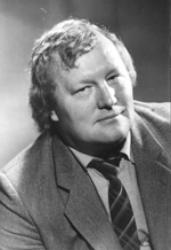
Tadeusz Boy-Zelenski
 Poland
- Tadeusz Boy-Żeleński: A Literary Titan
- Literary Mastermind and Critic
- Distinguished Translator and Librarian
- Political Activism and Social Commentary
- Final Chapter and Tragic End
- A Legacy of Influence and Inspiration
Tadeusz Boy-Żeleński: A Literary Titan
Boy-Żeleński's Early Life and Artistic BeginningsTadeusz Boy-Żeleński was a renowned Polish literary figure who left an indelible mark on theater criticism, translation, and public discourse. Born to the composer Władysław Żeleński, Boy-Żeleński pursued a medical degree but found his true calling in the arts. He joined a group of young artists and writers in Kraków and played a pivotal role in establishing the cabaret "Zielony Balonik" in 1906. His satirical writings from this period were later published as "Słówka."
Literary Mastermind and Critic
After serving as a railway physician during World War I, Boy-Żeleński embarked on a prolific career as a theater critic for the Kraków newspaper "Czas" and later for the Warsaw daily "Kurier Poranny." His incisive reviews and critiques shaped Polish theatrical discourse.
Distinguished Translator and Librarian
Boy-Żeleński's passion for French literature led him to translate a vast body of works into Polish. His translations included masterpieces by Molière, Racine, Voltaire, and Marcel Proust, among others. He also founded the "Biblioteka Boya," a collection of approximately 100 volumes of his French classic translations.
Political Activism and Social Commentary
Beyond his literary endeavors, Boy-Żeleński engaged in political and social commentary through his polemical articles in the weekly "Wiadomości Literackie." In his series of feuilletons, such as "Our Occupiers," he criticized the excessive influence of the Catholic Church on Polish society.
Final Chapter and Tragic End
With the outbreak of World War II, Boy-Żeleński relocated to Lwów. Under Soviet authority, he became the head of the Department of French Literature at the University of Lwów. However, his life was cut short when he was arrested by a Nazi Einsatzkommando in 1941 during a targeted campaign to eliminate Polish intellectuals. He was executed the same night, and his burial site remains unknown.
A Legacy of Influence and Inspiration
Tadeusz Boy-Żeleński's multifaceted contributions to Polish literature continue to resonate today. His sharp wit, critical insights, and tireless advocacy for artistic freedom serve as an inspiration for generations of artists and intellectuals. As a member of the Polish Academy of Literature, Boy-Żeleński's legacy is cemented as one of the most influential figures in Polish cultural history.