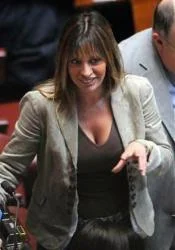
Kristina Schroder
 Germany
Kristina Schröder is a German sociologist, author, and former Christian Democratic Union (CDU) politician who became one of the youngest members of the Bundestag and, later, Germany’s federal minister for family affairs. Born Kristina Köhler in Wiesbaden, she entered national politics soon after university and held a cabinet post during Angela Merkel’s second government. Since leaving parliament, she has worked as a consultant, columnist, and public commentator.
A Young Member of Parliament
Born on August 3, 1977, Köhler grew up in Wiesbaden. She studied sociology, history, philosophy, and political science at Johannes Gutenberg University Mainz, completing a degree in sociology in 2002. She later earned a doctorate in political science; her dissertation examined ideas of justice and equality among CDU representatives and party members.
Köhler joined the CDU in 1994 and was active in its youth organization, the Junge Union. She served briefly on Wiesbaden’s city council and won a seat in the Bundestag in 2002, at age 25. She remained a member of parliament until 2017. In 2010 she married fellow CDU politician Ole Schröder and took his surname.
Minister for Family Affairs
In November 2009, Schröder became Federal Minister for Family Affairs, Senior Citizens, Women and Youth in Merkel’s government. Her responsibilities included family policy, childcare, gender equality, youth programs, and support for older people. During her term, the ministry worked to expand childcare capacity ahead of the 2013 legal entitlement to a place for young children.
Her approach to family policy stressed parents’ freedom to choose how to care for their children. She backed both expanded daycare and a benefit for families who cared for young children at home. That balance became a point of debate: supporters saw it as recognizing different family arrangements, while critics argued that the home-care payment could weaken incentives for women to return to work. Schröder also drew attention for questioning some conventional assumptions in gender-equality policy, making her a prominent and sometimes controversial voice in a portfolio often associated with progressive causes.
A New Chapter Outside Parliament
After the 2013 election, Schröder declined to continue as minister but remained in the Bundestag. She announced in 2016 that she would not seek another term, saying she wanted a more manageable family life. She left parliament in 2017, after fifteen years as a national legislator.
Since then, she has worked in communications and management consulting, written columns for the newspaper Die Welt, and published books on family and social policy. She has also taken part in conservative policy organizations and public debates. Her post-parliamentary career has kept her connected to politics without returning to elected office.
Legacy
Schröder’s public life has been shaped by an early rise, a high-profile ministerial appointment, and an approach to family and equality policy that resisted easy political labels. Her time in office placed her at the center of arguments about childcare, parental choice, and the role of government in family life. Since leaving parliament, she has continued those discussions as a writer and commentator.