
Laima Vaikule
 Latvia
Biography of Laima Vaikule
Laima Vaikule is an estrada singer who became the first envoy of the Western style on the Soviet stage in both her musical material and her way of dressing. With her deep voice, accent, refined movements, and "cabaret surrounded by monumental statues," she challenged the norms and expectations of the mid-80s. Even today, she can surprise audiences with her mere presence on stage. Time and criticism have no power over this Baltic star.
Childhood and Youth
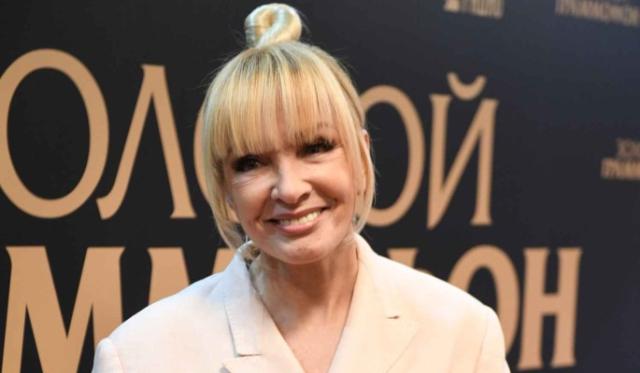
Laima Stanislavovna Vaikule was born on March 31, 1954, in the Latvian city of Cesis. Her family had no connection to music; her father Stanislav Vaikulis was a worker, and her mother Janina worked as a salesperson and later as a store director. The only person in her family with an affinity for art was her grandmother, who sang in a church choir. When Laima turned 3, her family moved from the provincial town to Riga, where they lived in a small one-room apartment. The Vaikulis family was quite large, with two more daughters and a son in addition to Laima. In the lively capital city, Laima started school and made her debut on stage at the age of 12. Before that, she had only entertained her family and guests with her singing. Now, she participated in a competition for young vocalists at the VEF Culture House in Riga. Laima received a diploma, her first award for her talent. This day is considered the start of Laima Vaikule's artistic biography. She did not dream of becoming an artist; she saw herself as a doctor. After finishing the 8th grade, she enrolled in a medical school. However, her views gradually changed, and it soon became clear that "Laima didn't choose music, music chose Laima." Singing was written into her destiny, not medicine. At the age of 15, Vaikule successfully passed an audition and became a soloist for the Riga Radio and Television Orchestra led by Raimonds Pauls. Starting in 1979, Vaikule performed in the famous variety show "Juras Perle" ("Sea Pearl") in Jurmala. Initially, she sang in the dance orchestra, but then became a soloist. She knew she couldn't stop there, realizing that she needed a formal education in the world of music. In 1984, Vaikule entered the Russian Institute of Theatre Arts (GITIS) to study directing.
Music
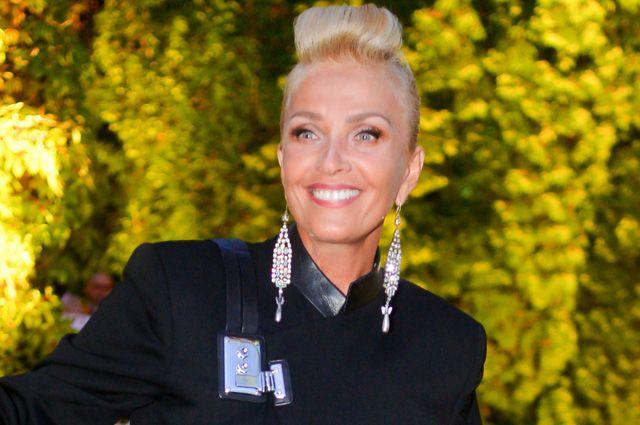
Even during her studies at GITIS, Vaikule caught the attention of the renowned songwriter Ilya Reznik. He saw in Vaikule the performer of the song "Night Bonfire." The song first aired on the radio and later on the popular music show "Song-86." That same year, Vaikule, together with Valery Leontiev, performed a new song called "Vernisazh" (music by Raimonds Pauls, lyrics by Ilya Reznik) at a Soviet-Italian concert of popular singers. This was her breakthrough and recognition as a popular singer. Vaikule woke up famous, and her photos adorned the covers of the country's leading publications. A year later, she solidified her success by singing the song "It's Not Evening Yet." Vaikule offered her own original interpretation, and the song only gained popularity, topping the radio charts and music shows.
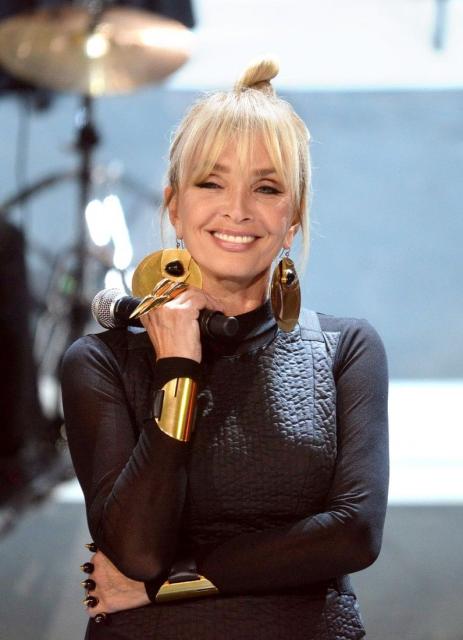
The creative collaboration between Vaikule, Pauls, and Reznik resulted in unforgettable hits such as "I Pray for You" and "Fiddler on the Roof," "Charlie" and "Business Woman." Vaikule also covered the song "Yellow Leaves," with lyrics written by the former Latvian ambassador to Russia, poet Janis Peters. The stage performances, in which the Baltic star appeared in unique and extravagant outfits accompanied by vibrant dance ensembles, turned into full-fledged music videos. Vaikule's All-Union recognition came in February 1987 after her participation in Raimonds Pauls' solo concert at the Central Concert Hall "Russia." This was her time, and Laima worked tirelessly. While still studying at GITIS, she prepared a large solo program, which premiered at the Central Concert Hall "Russia" in early 1988. It was another convincing step that proved Vaikule's artistic biography was not a coincidence but rather an evident pattern. The star firmly established herself in the world of estrada music and found her niche. In 1989, American producer Stan Cornelius invited Vaikule to the United States. She spent seven months working there, recording a new album in Michael Sembello's studio. In the US, she signed a contract with the record company MCA-GRP. A documentary film about Laima Vaikule, produced by "Videofilm" studio and American filmmakers, was released on American television. The Western press dubbed her the "Russian Madonna." Vaikule continues to collaborate with other artists, trying to recreate the success of "Vernisazh." The song "Feelings," which she performed with former "Kar-Man" group member Bogdan Titomir, did not become a mega-hit. However, 20 years later, fans demanded a modern version of the music video featuring the two stars.

Over the course of her artistic career, Vaikule has recorded about a dozen albums in Latvia and Russia. She has sold 20 million records in Russia, European countries, and the USA. Vaikule is a regular guest at the "New Wave" music competition, which took place in Jurmala from 2002 to 2014. She has been invited to the jury of the KVN festival "Golosyashchiy KiVIN." Her collaboration with singer Boris Moiseev is particularly memorable to fans. The music video "Baltic Romance" became one of the most popular on music TV channels.

Personal Life
Laima Vaikule's personal life rarely makes the headlines of tabloids or gossip columns. She has not used scandals to boost her popularity and has not shared private details. Her first and only common-law husband is Andrey Latkovsky, a former bass guitarist and producer. The couple has been together since 1970 when they first met. For many years, Vaikule and Latkovsky have been spouses, best friends, and creative partners. Andrey was by her side when Laima fell seriously ill. He supported her every step of the way. They do not have any children, but Vaikule channels her maternal love towards young singers. She was one of the founders of the "Jurmala" competition for young pop singers.

Vaikule plans to age gracefully and believes that one should not become a slave to appearance. "The minimum standard of living" for her includes decent shoes, healthy teeth, a good manicure, and well-groomed hair. Everything else depends on one's perspective. Even her stage makeup is minimalistic. Vaikule claims that she has not undergone plastic surgery. However, some fans have speculated, based on certain photos, that she may have had injections of fillers and botulinum toxin.
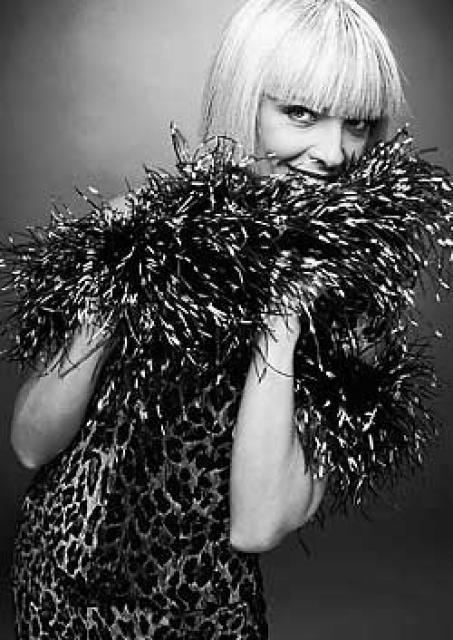
Adapting to the demands of the times, Vaikule has created a personal website and an Instagram account. Her account features photos illustrating her work, daily life, meetings with friends and colleagues, and snapshots of her beloved four-legged pets—Vaikule has a special affection for dogs.
Current Activities
In the summer of 2018, Laima Vaikule successfully held another "Randevu" festival in Jurmala. Popular Latvian performers such as Intars Busulis, known in Russia as well, and Janis Stibelis, a participant in national Eurovision selections, served as hosts for the concerts at the Dzintari Concert Hall. Ani Lorak and Alexey Chumakov, Artur Pirozhkov and Tamara Gverdtsiteli, Uma2rman and Alekseev, Philipp Kirkorov, and others arrived on the Baltic coast. Philipp Kirkorov was asked twice to perform his hit "The Mood is Blue." Valery Leontiev presented a new composition called "The Wind Violin."
A month later, Vaikule went on a tour in Ukraine, where she gave an interview to journalists from Odessa. She stated that she would never go to Crimea, no matter how high the fee offered. Vaikule also expressed her joy over the collapse of the Soviet Union. This sparked a wave of angry criticism and insults towards the singer. Colleagues in the music industry responded differently to Vaikule's statements. Some granted her the right to her own opinion, while others accused her of hypocrisy and of "biting the hand that feeds her."
Later, Vaikule shared her thoughts on the situation. She admitted that she does not watch television but is aware of people's opinions of her. "I don't even know what to say. I have never commented on any artist's actions in my life. It's just shameful, malicious, and ugly. It's jealousy, envy. It's horrible. It's just disgusting," she said. According to Vaikule, journalists are liars and provocateurs. Her concert director also supported her, stating that nothing serious had happened and that Vaikule's words had been "twisted and exaggerated."
The scandal had a negative impact not only on Vaikule's image but also attracted the attention of Russian tax authorities. They began questioning the legality of Vaikule's performances at private parties and corporate events since foreign artists must comply with certain requirements if they want to work in Russia. If it was found that the Latvian star had violated any regulations, she could face fines or a ban on performing in Russia.
Later, law enforcement agencies reported that there were no grounds for holding Vaikule accountable. Vaikule herself stated that after the sanctions were lifted, she would immediately visit Crimea and perform there for free.
Discography
- 1986 — "First Season. The 80s"
- 1992 — "I Pray for You"
- 1993 — "Laima Tango"
- 1994 — "Goodbye, My Dear!"
- 1996 — "I Step on Piccadilly"
- 1996 — "Viss nāk un aiziet"
- 1998 — "Latin Quarter"
- 1999 — "The Mirror"
- 2000 — "Greatest Hits"
- 2002 — "Names for All Times"
- 2005 — "What Does the Pianist Play?"
- 2013 — "At Home Again"


